To clean beer lines, push a caustic (alkaline) cleaning solution through each line with a hand pump or pressurized cleaning bottle, let it soak for 15 to 20 minutes, then flush thoroughly with clean water until it runs completely clear. Do this every two weeks. Every three months, run an acid cleaner as well to dissolve beerstone and mineral deposits. And every time, clean the keg coupler and faucet too, because that is where most neglected buildup hides.
Below is the full process, how often to do it, what you will need, and the mistakes that quietly cost bars money and customers.
Why does cleaning beer lines matter?
As beer travels from keg to faucet it leaves behind yeast, protein, bacteria, mold, and a mineral scale called beerstone (calcium oxalate). Left alone, that buildup does three expensive things: it turns good beer sour or buttery, it slows pours and creates foam that wastes product, and it becomes a sanitation problem a health inspector will notice. The Brewers Association's Draught Beer Quality Manual recommends cleaning draft systems at least every two weeks for exactly these reasons.
Put simply, line cleaning is the cheapest quality control you have. A bottle of cleaner costs less than a pint, and it protects every keg you pour.
How often should you clean beer lines?
There are two cleaning cycles, and good bars run both on a schedule rather than waiting for a problem.
| Cleaning cycle | How often | What it removes |
|---|---|---|
| Caustic (alkaline) | Every 2 weeks (or every keg change) | Yeast, protein, bacteria, mold |
| Acid | Every 3 months | Beerstone and mineral deposits |
High-volume bars often clean between every keg. Slow accounts should still never stretch past six weeks. If you serve nitro or heavily dry-hopped beers, clean on the tighter end of the range, because those lines foul faster.

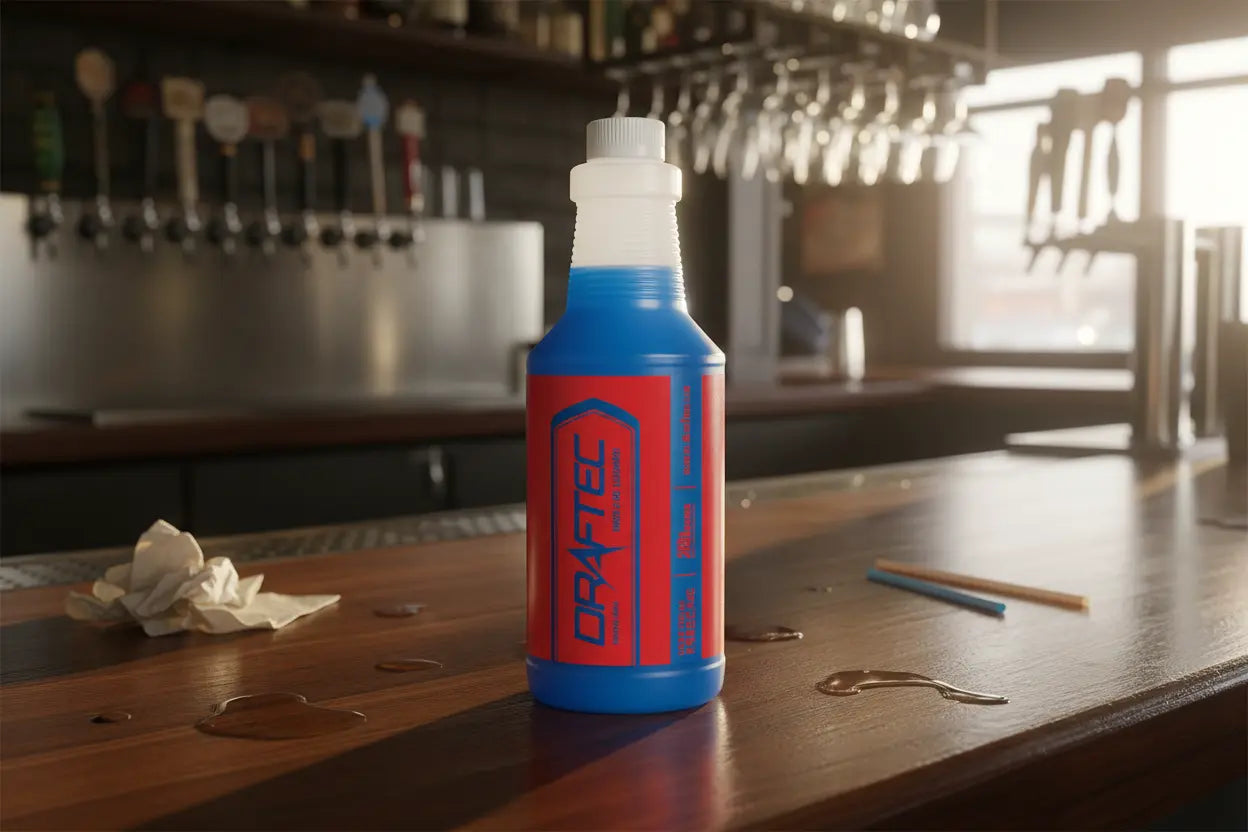
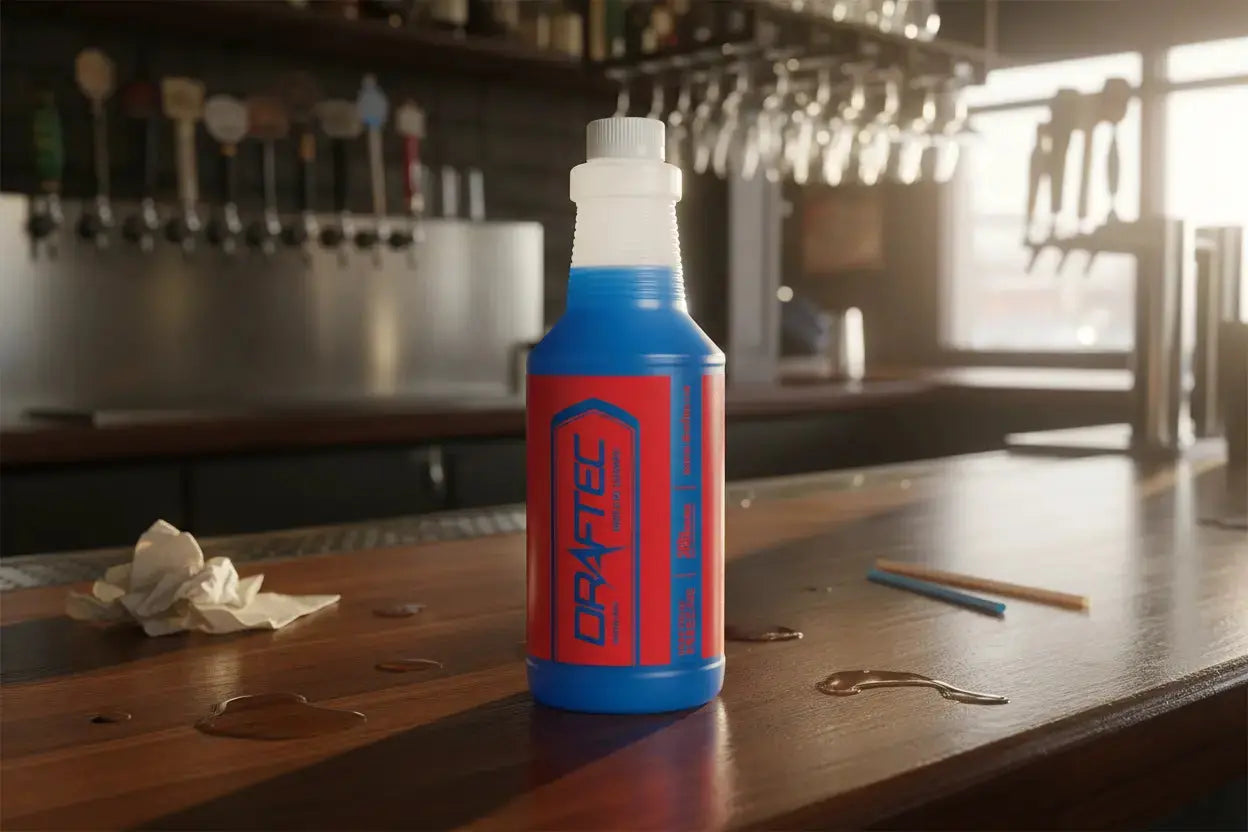
Alkaline cleaner that turns bright blue in solution, so you can see when cleaner has reached the faucet and see when it has fully flushed out.
What you will need
- A beer line cleaning kit (hand pump or a pressurized cleaning bottle) or a recirculating pump for multiple lines
- Caustic beer line cleaner for the every-2-weeks clean
- Acid line cleaner for the every-three-months clean
- A bucket, clean water, and a faucet brush and coupler brush
- Gloves and eye protection (cleaning chemicals are strong by design)

Clean up to four lines at once without pulling couplers. Built for high-volume bars and breweries that cannot afford downtime.

Professional recirculating pump that powers cleaning solution through long draw runs over 300 feet for a thorough, even clean.
How do you clean beer lines step by step?
- Disconnect the keg. Remove the coupler from the keg so you are not pushing cleaner into your beer.
- Mix the cleaning solution. Follow the label rate for your cleaner and use the water temperature it specifies. A dye cleaner makes this foolproof: you can watch the colored solution move through the line.
- Push cleaner through the line. Connect your pump or cleaning bottle and run solution until it flows from the faucet. With a blue dye cleaner, stop when the faucet runs solid blue.
- Let it soak. Hold the solution in the line for 15 to 20 minutes so it can break down the buildup.
- Scrub the parts. While it soaks, brush the faucet and coupler in cleaning solution (see the next section).
- Flush thoroughly with clean water. Run fresh water until every trace of cleaner is gone. With a dye cleaner you are done when the water runs clear, not blue. This step protects flavor and safety, so do not rush it.
- Reconnect and pour off. Hook the keg back up and pour until beer runs clean and properly carbonated.
Don't forget the coupler and faucet
The most overlooked step is the hardware at each end of the line. Disassemble the faucet, soak the parts in cleaning solution, brush them, and rinse. Do the same for the keg coupler. This is where mold and sour buildup collect first, and a clean line feeding a dirty faucet still pours bad beer.
A dedicated shutoff valve on each line makes this routine far easier, because you can isolate one line and service its faucet without draining or depressurizing the rest of the system.

Isolate a single line to clean its faucet and coupler without shutting down your whole draft system.
Caustic vs acid cleaner: which one and when?
They are not interchangeable, and a complete program uses both. Caustic (alkaline) cleaner is your regular every-2-weeks workhorse that breaks down the organic gunk: yeast, protein, and mold. Acid cleaner is the deep clean, run every three months, that dissolves beerstone, the hard mineral scale an alkaline cleaner simply cannot remove. Skip the acid cycle and beerstone slowly builds until your lines need to be replaced.
A simple rule: clean with blue (caustic) every two weeks, and clean with red (acid) every three months.

Removes beerstone and mineral deposits that alkaline cleaners leave behind. The red dye shows you coverage and flush-out, just like the blue.
Industry Standard
This two-cycle schedule, caustic every two weeks and acid every three months, comes straight from the Brewers Association's Draught Beer Quality Manual, the reference standard the draft beer industry uses for line cleaning chemicals and frequency.
Read the cleaning chemicals section of the Draught Beer Quality Manual (free PDF) →
Common beer line cleaning mistakes
- Rinsing too little. Leftover cleaner ruins the first pours and is a safety issue. Flush until water runs clear.
- Skipping the acid clean. Caustic alone never touches beerstone. The every-three-months acid clean is not optional.
- Ignoring the faucet and coupler. Clean line, dirty hardware, bad beer.
- Guessing the concentration. Follow the label rate. Too weak does not clean; too strong wastes product and can damage components.
- Wasting beer on every clean. A foam-on-beer (FOB) detector keeps the line full during keg changes and cleaning, which cuts the beer you dump.

Stops beer loss in long-draw systems by keeping lines full during keg changes and line cleaning. Pays for itself in saved product.
Frequently asked questions
How often should beer lines be cleaned?
Clean with a caustic (alkaline) cleaner every two weeks, ideally at every keg change, and run an acid cleaner every three months to remove beerstone. Never go longer than six weeks between cleanings.
What cleaner should I use to clean beer lines?
Use a chemical made specifically for draft beer lines. A caustic cleaner handles the regular clean, and an acid cleaner handles beerstone removal every three months. Dye-based cleaners make it easy to confirm coverage and a complete flush.
Can I clean beer lines with just water?
No. Water alone will not dissolve the yeast, protein, and beerstone that build up inside draft lines. You need a purpose-made line cleaner to actually break down and remove the buildup.
What happens if you don't clean your beer lines?
Buildup of bacteria, mold, and beerstone makes beer taste sour or off, slows pours and increases foaming waste, and creates a sanitation problem. Over time, beerstone can ruin lines so they have to be replaced.
Do I need to clean the faucet and keg coupler too?
Yes. The faucet and coupler collect buildup faster than anywhere else. Disassemble, soak, brush, and rinse them every time you clean the lines.
Related guides
- Why Draft Beer Line Cleaning Is One of the Smartest Investments You Can Make
- Maintain Your Beer Lines Effectively
- Why Clean Beer Lines Matter More Than You Think
- Draft Beer Line Cleaning Regulations: What Bar Owners Need to Know
Get every part you need to clean your draft system
Caustic and acid cleaners, brushes, shutoffs, FOBs, and replacement parts, shipped fast to bars and breweries across North America.
Shop draft cleaning supplies →Expert advice and free technical support on every order.