Let’s be honest. You could be pouring the best craft beer in town… but if your beer lines are dirty, it won’t matter.
Think of your beer lines like arteries. If they’re clogged, contaminated, or neglected, everything that flows through them suffers.
The Hidden Impact on Taste
Beer is sensitive. It’s alive. Even slight contamination can completely change the flavor profile. What should taste crisp and refreshing suddenly tastes sour, buttery, metallic, or flat. Customers may not say, “Your lines are dirty,” but they will say, “This tastes off.”
And that’s worse.
The Cost of Ignoring Dirty Lines
Dirty lines don’t just affect taste. They hit your wallet. Foam waste increases. Customers send beers back. Online reviews suffer. Repeat business disappears.
All because of something you can’t even see at first glance.

What Causes Beer Lines to Get Dirty?
Beer lines don’t magically stay clean. Every pour leaves residue behind.
Yeast, Bacteria, and Mold Buildup
Beer contains yeast and organic material. Over time, these create a breeding ground for bacteria. Warm spots in your system? Even worse. Microbial growth builds up inside tubing like plaque on teeth.
Beer Stone and Mineral Deposits
Beer stone is a crusty calcium oxalate buildup that forms inside lines. It’s stubborn. And it traps bacteria like a sponge.
Think of it as a dirty welcome mat for contamination.
Temperature and Moisture Factors
If your glycol system isn’t holding temperature or your walk-in fluctuates, you’re inviting problems. Warm beer lines accelerate bacterial growth. Consistency is key.

The Most Common Signs Your Beer Lines Are Dirty
Let’s get practical. Here’s what to look for.
Off or Sour Taste
Does your pale ale taste tart? Does your lager have a vinegar edge?
That’s a red flag. Sourness, butter (diacetyl), metallic notes, or cardboard flavors often point to contamination in the lines, not the keg.
Foul or Musty Smell
Before you even taste it, smell it.
Dirty lines can create musty, moldy, or sulfur-like aromas. If you detect something funky that shouldn’t be there, trust your nose.
Excessive Foam
Foam problems aren’t always pressure-related.
If you’ve balanced your system and the beer still pours like shaving cream, buildup inside the line could be creating turbulence. Dirty walls inside tubing disrupt smooth flow.
Cloudy or Hazy Beer
Some styles are meant to be hazy. But if your beer that should be clear looks murky, sediment in the lines could be the culprit.
Slow or Inconsistent Pour
Does the beer start fast, then slow down? Or trickle unevenly?
Obstruction from buildup can restrict flow. That’s your system choking.
Visible Particles in Beer
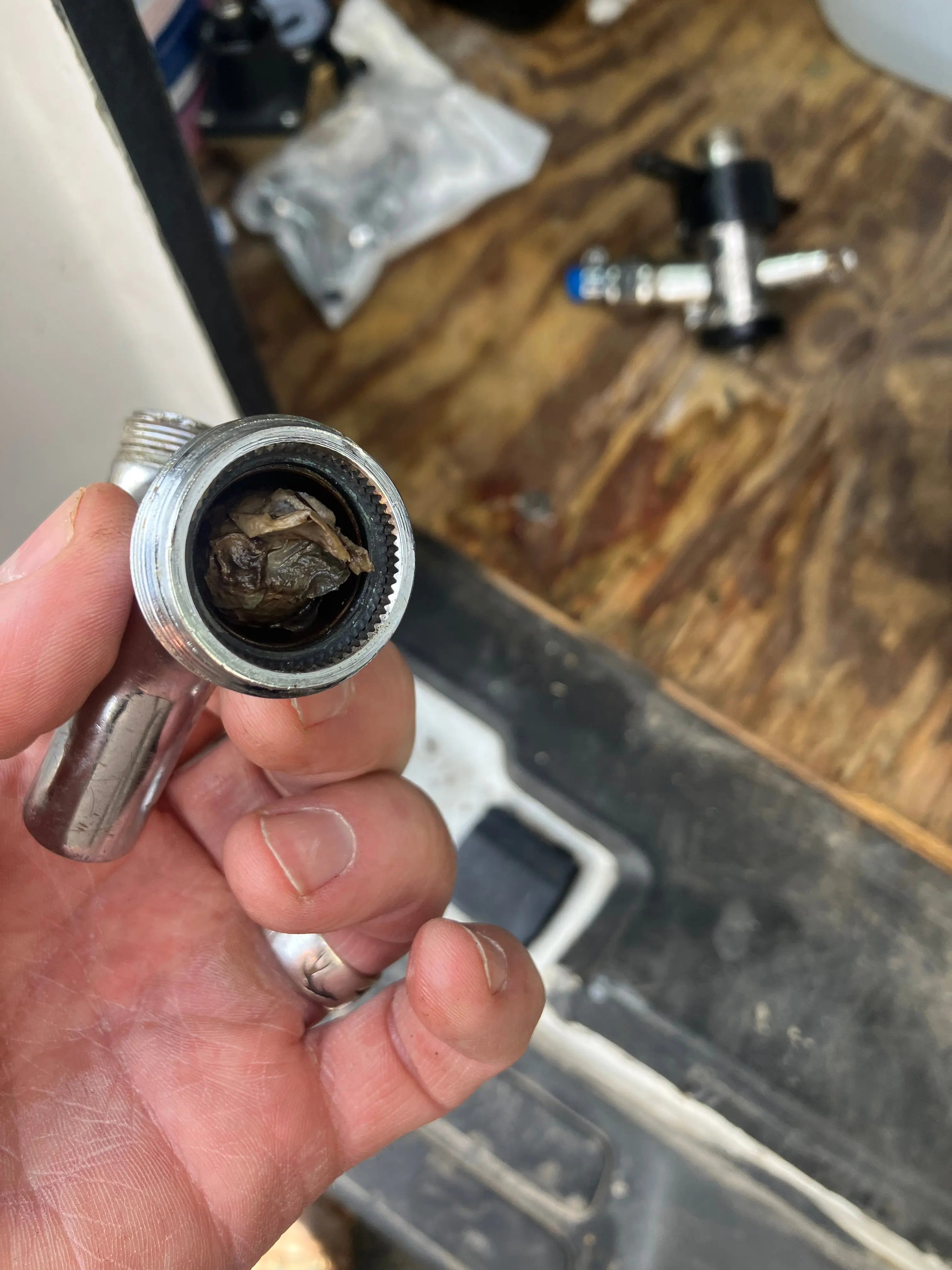
This one’s obvious. If you see floating specs or flakes in the glass, stop serving immediately. That’s contamination breaking loose.
How Dirty Beer Lines Affect Different Beer Styles
Not all beers react the same way.
Light Lagers and Pilsners
These are the most unforgiving. There’s nowhere for off-flavors to hide. Dirty lines turn crisp into cardboard fast.
IPAs and Hoppy Beers
Hops are aromatic and delicate. Dirty lines dull those bright citrus and pine notes. Your juicy IPA suddenly tastes muted.
Stouts and Dark Beers
Dark beer can mask minor issues, but buttery or sour contamination still sneaks through. Don’t assume you’re safe just because it’s dark.
How to Inspect Your Beer Lines Like a Pro
You don’t need a lab coat. Just use your senses.
Visual Inspection
Check couplers, faucets, and clear tubing. Look for slime, discoloration, or cloudy walls. Shine a flashlight if needed.
Smell Test
Disconnect the faucet and smell the line. A clean system smells neutral, maybe faintly beery. Anything sour or moldy? Problem.
Tasting Test
Pour the first glass of the day and taste critically. If it’s off, dump it and investigate.
How Often Should Beer Lines Be Cleaned?
This is where most people fall short.
Industry Recommendations
Most industry guidelines recommend cleaning beer lines every two weeks. No exceptions. Even if sales are slow.
Industry Standard
The Brewers Association's Draught Beer Quality Manual is the source behind that two-week number. It's the reference standard the draft beer industry uses for line cleaning frequency and chemical selection.
Read the cleaning chemicals section of the Draught Beer Quality Manual (free PDF) →
High-Volume vs Low-Volume Systems
High-volume bars push more beer, which means more residue. Low-volume systems are actually worse sometimes because beer sits longer.
Bottom line? Stick to a schedule.
What Happens If You Don’t Clean Beer Lines?
Still thinking you can stretch it?
Health Risks
Bacteria and mold growth aren’t just gross, they can pose health risks. No bar wants that liability.
Equipment Damage
Beer stone buildup can corrode fittings and damage tubing. Replacement costs add up quickly.
Lost Revenue
Wasted foam. Returned pints. Bad reviews. It’s death by a thousand cuts.
DIY Beer Line Cleaning vs Professional Service
So what’s the move?
Pros and Cons of DIY
DIY saves money. You control the schedule. But it requires proper chemicals, pumps, and procedure. Skip steps and you’re just rinsing, not cleaning.
When to Call a Professional
If you have long-draw systems, glycol chillers, or multiple tap towers, professional service ensures full-system sanitation. They test flow rates and pressure too.
Sometimes peace of mind is worth it.
Preventing Dirty Beer Lines
Cleaning is reactive. Prevention is proactive.
Proper Temperature Control
Keep beer between 36 to 38°F consistently. Warm lines are bacteria playgrounds.
Routine Maintenance Checklist
-
Clean every two weeks
-
Acid clean every three months for beer stone
-
Inspect faucets weekly
-
Replace vinyl lines annually
Staff Training Tips
Train bartenders to recognize off-flavors. Make it part of opening duties. Clean lines should be non-negotiable.
Conclusion
Dirty beer lines are silent profit killers. They hide behind foam issues, flavor complaints, and subtle inconsistencies. But once you know the signs, sour taste, musty smell, excessive foam, cloudy pours, you can catch the problem early.
Think of beer line cleaning like brushing your teeth. Skip it, and things get ugly fast.
Your beer deserves better. Your customers deserve better. And honestly? So does your business.
Stay proactive. Stick to a schedule. Trust your senses.
Because great beer should taste like the brewer intended, not like your tubing.
FAQs
1. How long does it take for beer lines to get dirty?
Buildup can begin within days, but noticeable contamination typically develops within two weeks without cleaning.
2. Can dirty beer lines make people sick?
Yes, bacterial or mold contamination can pose health risks, especially for sensitive individuals.
3. Why does my beer foam excessively even with correct pressure?
Buildup inside the line can create turbulence, leading to excessive foam.
4. Is rinsing beer lines with water enough?
No. Water alone doesn’t remove beer stone or kill bacteria. Proper chemical cleaning is necessary.
5. How can I tell if the problem is the keg or the lines?
If multiple kegs taste off on the same tap line, the issue is likely the line. If only one keg tastes bad, it may be the product itself.
More interesting information on beer line cleaning for bar owners here
Recommended draft line cleaning products

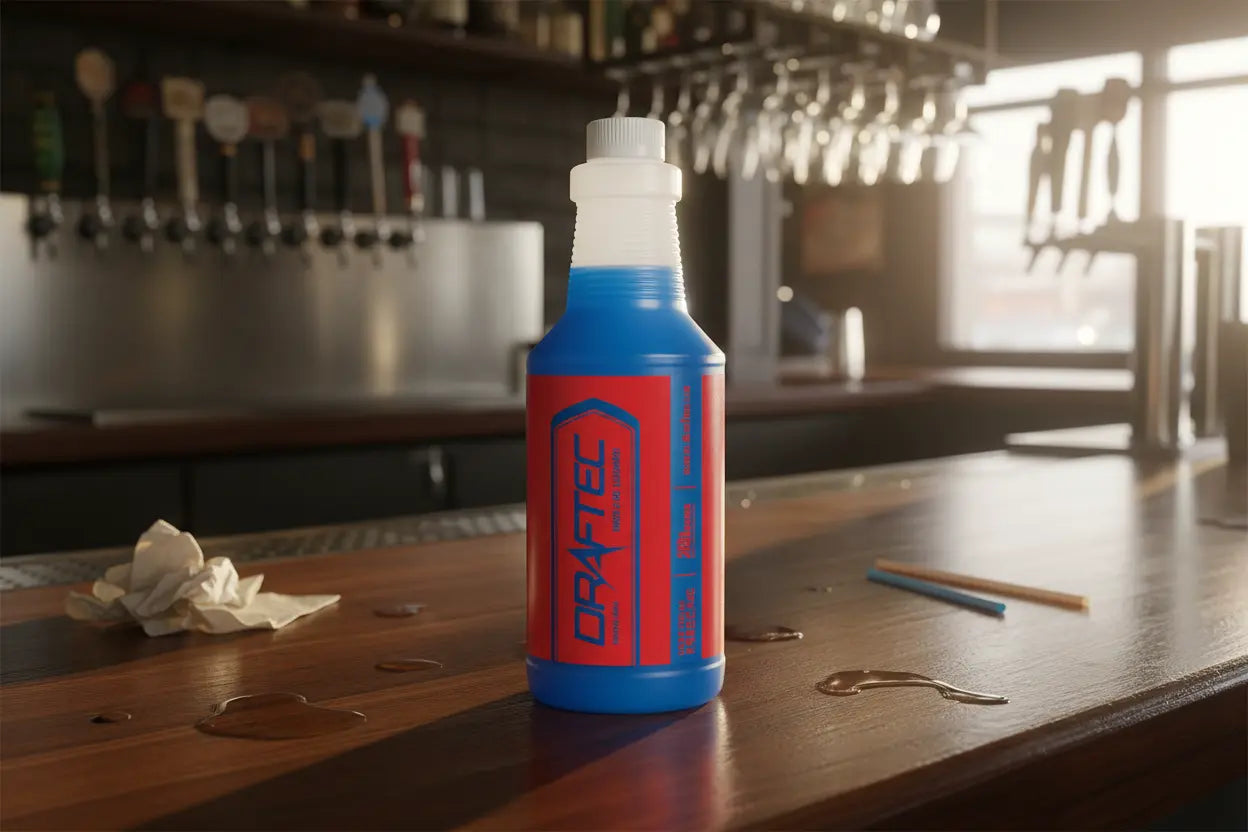
Turns bright blue in solution so you can see when cleaner reaches the faucet and when it has fully flushed out.

Removes beerstone and mineral deposits that alkaline cleaners leave behind. The red dye shows coverage and flush-out.

Clean up to four lines at once without pulling couplers. Built for high-volume bars and breweries that cannot afford downtime.

Professional recirculating pump that powers cleaning solution through long draw runs over 300 feet for a thorough, even clean.
Frequently asked questions
How often should I clean my draft beer lines?
At least every two weeks with a caustic cleaner, which is the Brewers Association standard, plus an acid clean every three months to remove beerstone.
What cleaner do I need?
A caustic (alkaline) cleaner for the regular every-2-weeks clean, and an acid cleaner every three months for beerstone. Dye-based cleaners make it easy to confirm a full flush.
Can I clean beer lines with just water?
No. Water alone will not dissolve the yeast, protein, and beerstone that build up inside draft lines. You need a purpose-made line cleaner.
What happens if I do not clean my beer lines?
Buildup of bacteria, mold, and beerstone makes beer taste off, slows pours, increases foaming waste, and over time can ruin the lines so they must be replaced.
Related guides
- How to Clean Beer Lines: A Step-by-Step Guide for Bars
- Why Draft Beer Line Cleaning Is One of the Smartest Investments You Can Make
- Maintain Your Beer Lines Effectively
- Draft Beer Line Cleaning Regulations: What Bar Owners Need to Know
Stock up on draft line cleaning supplies
Caustic and acid cleaners, multi-head cleaning cans, electric pumps, and the parts to keep every line pouring clean, shipped fast across North America.
Shop cleaning supplies →Expert advice and free technical support on every order.