If you are skipping or stretching your draft line cleaning schedule, you are losing money on every pour. Dirty lines cost you in spoiled beer, customer complaints, and reputation damage, and the math makes a strong case for staying on top of it. Cleaning a line costs a few dollars; not cleaning it costs you sales.
Industry standards: how often should you clean?
The Brewers Association Draught Beer Quality Manual sets the standard: clean every draft line at minimum every two weeks. The manual covers approved chemical concentrations, required equipment, and step-by-step procedures (Chapter 7), and was developed by brewers, manufacturers, and industry experts with one goal, to serve every beer exactly as the brewer intended. You can read the cleaning chemicals chapter free (PDF). For the full walkthrough, see our guide on how to clean beer lines.
What happens when you skip cleanings
Go from bi-weekly to monthly and yeast, bacteria, and mold start building up inside your lines. The flavor hit shows up first in lighter beers, pilsners and wheat beers, where there is nothing to hide it. Customers notice. They order fewer rounds, ask for refunds, switch to bottles, or just go somewhere else. None of that shows up on a cleaning invoice, but all of it shows up in your sales.
The real cost of dirty lines
A single line cleaning runs $6 to $12 when you factor in product loss, labor, and chemicals. Compare that to what dirty lines actually cost:
| Scenario | What it costs you (2 weeks) |
|---|---|
| Clean on schedule (every 2 weeks) | $6 to $12 per line |
| Skip it (lose just 2 pints a day at $6) | $168+ in lost beer, before refunds, bad reviews, and lost customers |
The cleaner itself is the cheapest part of the equation. A caustic cleaner handles the every-2-weeks job; an acid cleaner removes the beerstone that builds up over time. For high-volume bars and long draw systems, the right cleaning hardware pays for itself fast.

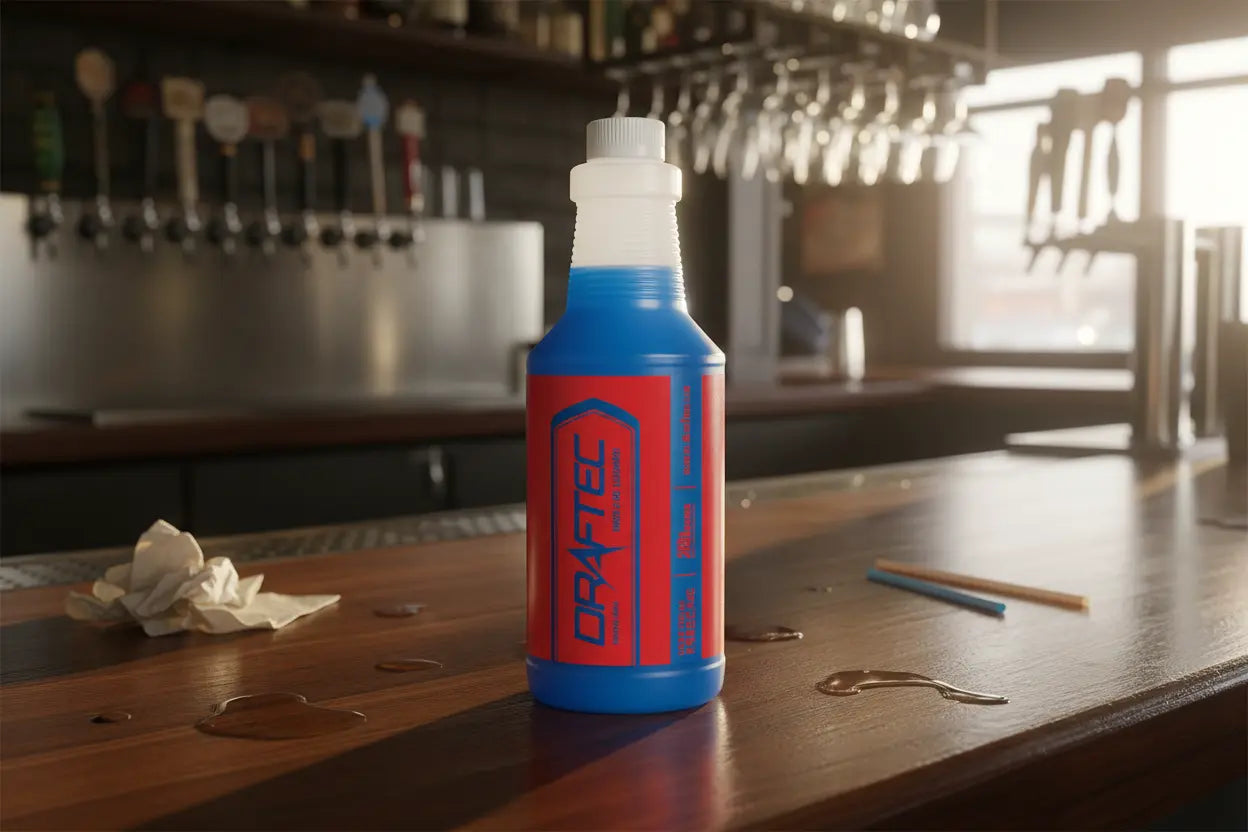
Turns bright blue in solution so you can see when cleaner reaches the faucet and when it has fully flushed out.

Removes beerstone and mineral deposits that alkaline cleaners leave behind. The red dye shows coverage and flush-out.

Clean up to four lines at once without pulling couplers. Built for high-volume bars and breweries that cannot afford downtime.

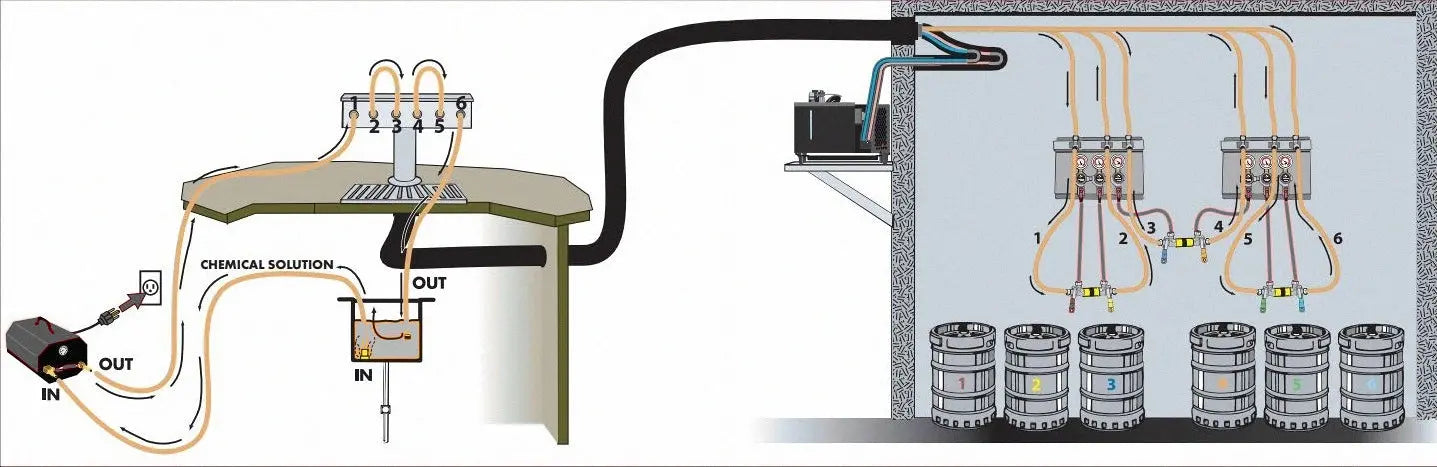
Professional recirculating pump that powers cleaning solution through long draw runs over 300 feet for a thorough, even clean.
The bottom line
Draft beer quality drives draft beer sales. Cleaning your lines on schedule is the cheapest thing you can do to protect that. The real cost of line cleaning is not cleaning your lines.
Frequently asked questions
How often should I clean my draft beer lines?
At least every two weeks with a caustic cleaner, which is the Brewers Association standard, plus an acid clean every three months to remove beerstone.
How much does beer line cleaning cost?
About $6 to $12 per line once you account for cleaner, labor, and the small amount of product lost. That is far less than the beer and customers you lose to dirty lines.
What happens if I do not clean my beer lines?
Yeast, bacteria, mold, and beerstone build up and make beer taste off, especially in lighter styles. Customers order less, ask for refunds, and switch to other venues.
What cleaner do I need?
A caustic (alkaline) cleaner for the regular every-2-weeks clean, and an acid cleaner every three months for beerstone. Dye-based cleaners make it easy to confirm a full flush.
Related draft line cleaning guides
- How to Clean Beer Lines: A Step-by-Step Guide for Bars
- Maintain Your Beer Lines Effectively
- Why Clean Beer Lines Matter More Than You Think
- Draft Beer Line Cleaning Regulations: What Bar Owners Need to Know
Stock up on draft line cleaning supplies
Caustic and acid cleaners, multi-head cleaning cans, electric pumps, and the parts to keep every line pouring clean, shipped fast across North America.
Shop cleaning supplies →Expert advice and free technical support on every order.