Most bar owners assume someone is watching over the cleanliness of their draft beer system. A distributor sends someone to clean the lines every couple of weeks. The faucets look fine. The beer is pouring. Everything must be okay.
Here's what most people in the industry know, and very few say out loud: dirty draft beer systems still pour beer. Bad systems still pour beer. And in most of the country, there is no enforcement body making sure yours isn't one of them.
This post breaks down the reality of draft beer line cleaning regulations in the U.S., what "industry standard" actually means, and what you as a bar or restaurant owner can do to make sure you're not serving your customers something they didn't order.
Beer Is a Food Product, But We Don't Always Treat It Like One
Draft beer is, by definition, a food product. It's sometimes called "liquid bread", a fermented beverage made from water, grain, hops, and yeast. Food safety regulations govern everything from the temperature of your walk-in cooler to the handling of raw chicken. Beer should be no different.
But it is different, and the gap is significant.
Unlike food prep equipment, where health inspectors routinely check sanitation standards, draft beer systems exist in a regulatory gray zone. The Brewers Association has published well-regarded guidelines recommending lines be cleaned at minimum every two weeks. Some states have adopted those guidelines into code. Most haven't.
The Brewers Association recommendation: Draft beer lines should be cleaned every two weeks using an approved alkaline or acid-based cleaning solution. Faucets and couplers should be disassembled and cleaned at the same interval.
In practice, the regulations, and the accountability for meeting them, vary dramatically depending on where you're located. Some states require weekly cleaning with local health department oversight. Many regions have no enforcement at all, relying entirely on distributor-managed cleaning programs that may or may not be done correctly.
What Grows in a Neglected Draft Beer Line
A draft beer line isn't just a tube. It's a warm, dark, moist environment that's in constant contact with a sugar-rich liquid. Without regular cleaning, biological and mineral deposits accumulate quickly and compound over time.
The common contaminants in a dirty draft system include:
- Wild yeast, produces off-flavors including acetaldehyde (green apple), ethyl acetate (nail polish), and excessive sourness
- Bacteria, particularly lactic acid bacteria and acetic acid bacteria, which sour and spoil beer as it travels through the line
- Mold, can form in faucet bodies, drip trays, and anywhere moisture collects
- Beer stone (calcium oxalate), a hard mineral deposit that forms on line walls, providing a rough surface that makes biological contamination worse
- Rust and oxidation, from metal fittings, couplers, and components that haven't been inspected or replaced
The hard truth: You can ruin a perfectly crafted beer in the time it takes to travel from the keg to the glass. A brewer may spend months dialing in a recipe, and a contaminated beer line can destroy the entire flavor profile in seconds.
Off-flavors from dirty lines are commonly mistaken for the beer itself. Customers blame the brewery. They leave bad reviews. They order something different next time. The brewer, who has no control over what happens to their product after it leaves the brewery, takes the reputational hit for a problem they didn't cause.
The Regulatory Landscape: A State-by-State Patchwork
There is no federal standard for draft beer line cleaning in the United States. Oversight is handled at the state and local level, and the gap between regions is significant.
A handful of states have codified cleaning frequency requirements. Ohio, Pennsylvania, Illinois, and Connecticut, for example, have regulations that reference draft beer system maintenance. Local health departments in some cities treat tap lines the way they treat other food-contact surfaces, with documented inspection requirements.
But most regions operate on an informal system: the beer distributor takes responsibility for cleaning the lines as a condition of their sales relationship with the account. This is where the system breaks down.
The Problem with "Cheap" Line Cleaning
Distributor-provided line cleaning is a sales tool, not a quality service. In many cases, a cleaning vendor is being paid $2-$5 per line and given a 5-to-10 minute window to complete the job. A proper beer line cleaning, one that actually removes biological contamination and mineral deposits, takes significantly longer than that.
What often happens instead is a quick flush that looks like a cleaning but doesn't meet any meaningful standard. The lines are wet and the beer runs clear at the end. The system looks fine. But the biofilm, the yeast colonies, the beer stone, they're still there.
Free line cleaning is, in most cases, a poorly managed and ineffective service. You get what you pay for, and what you're paying for is nothing.
What This Means for Bar and Restaurant Owners
If you operate a draft beer program, the regulatory environment puts most of the practical responsibility on you, whether you realize it or not. In distributor-maintained regions, you can and should hold your distributor accountable for the quality of their cleaning service. But there are real limits to that accountability when there's no outside enforcement.
The components your distributor is least likely to clean properly, or at all, include:
- FOBs (foam on beer detectors), require disassembly and manual cleaning; frequently skipped
- Faucet bodies, need to be pulled apart to clean the internal passages where yeast and bacteria colonize
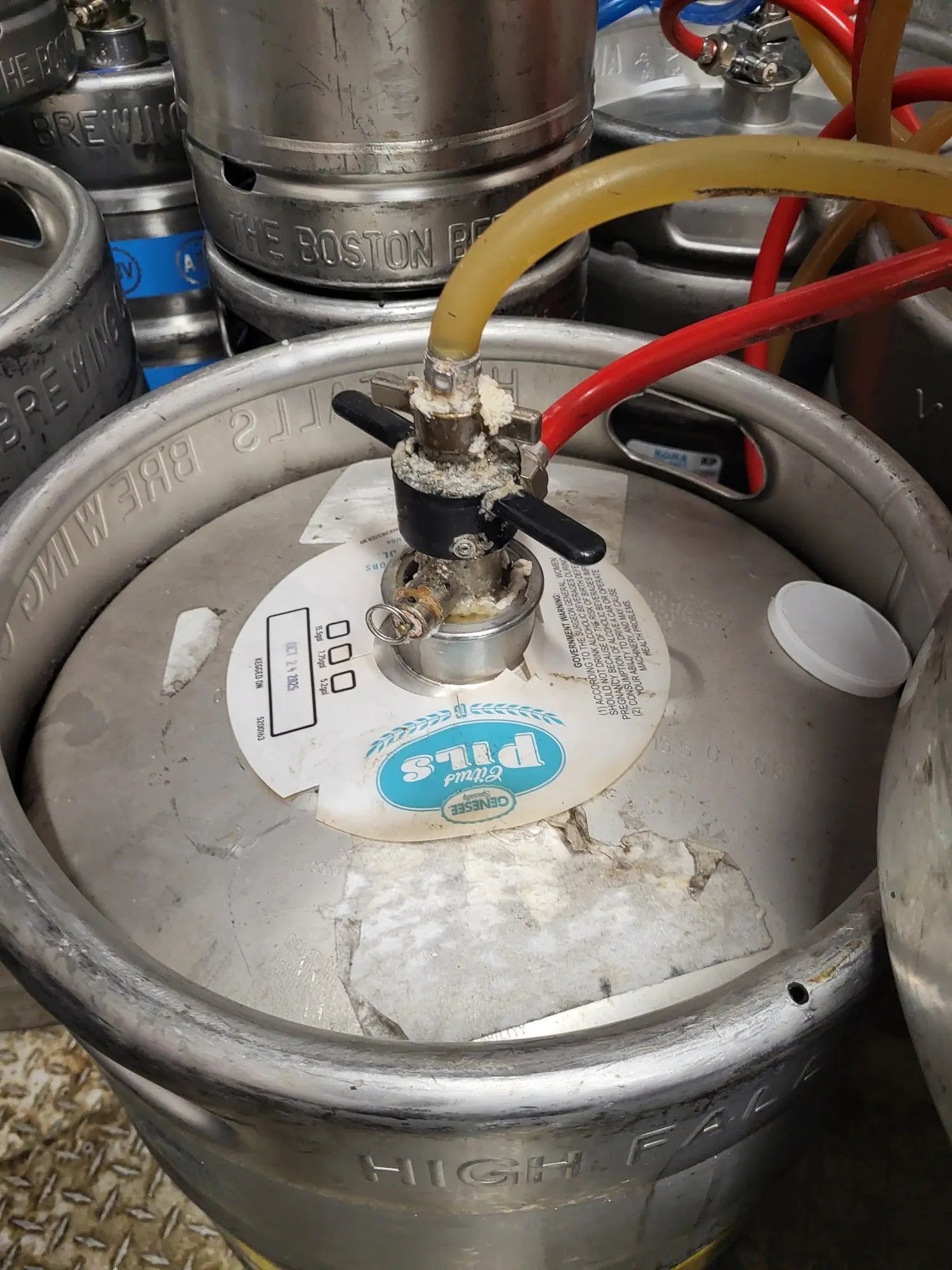
- Keg couplers, probes and bodies accumulate deposits that a quick flush won't remove
- Drip trays and towers, not part of most distributor cleaning scopes, but a major source of mold and contamination
Even when distributors do clean the main beer lines, these components are often left untouched. Hiring a third-party draft beer maintenance company for a full system cleaning, one that actually disassembles and properly sanitizes all components, is the only reliable way to know the job was done right.
If you need a qualified line cleaner or draft beer system installer, we started the Draft Service Network to help bars, restaurants, breweries, and taprooms find local draft service pros. Listings are opt-in and reviewed before publishing.
Signs Your Lines Need Attention Now
You don't need a lab test to know your system has a problem. These are the practical signals that something is wrong:
- Beer has off-flavors: sour, vinegary, green apple, buttery, or metallic notes
- Excessive foam that doesn't resolve with pressure or temperature adjustments
- Beer that tastes noticeably worse at the end of the keg
- Visible buildup or discoloration inside faucet bodies or on coupler probes
- Drip trays that smell sour or show visible mold
- Customers commenting on the taste, even if they can't describe what's wrong
Proper Beer Line Cleaning: What It Actually Takes
A real beer line cleaning is not a 5-minute job. The Brewers Association guidelines, which represent the consensus standard of the craft beer industry, describe a process that takes time, uses the right chemicals, and requires proper contact time with every surface that touches beer.
A full cleaning cycle should include:
- Flushing the system with clean water to remove residual beer
- Circulating an alkaline cleaning solution through the lines for a minimum contact time, typically 15 to 20 minutes, to break down organic material
- Rinsing thoroughly to remove all cleaning chemical before reconnecting
- Disassembling and soaking faucets in cleaning solution, then brushing internal components
- Cleaning and inspecting keg couplers, replacing seals as needed
- Acid cleaning periodically (about every three months) to remove beer stone that alkaline cleaners can't break down
Industry Standard
This is the same procedure and chemical rotation laid out in the Brewers Association's Draught Beer Quality Manual, the reference document behind the "industry standard" language regulators and health inspectors point to.
Read the cleaning chemicals section of the Draught Beer Quality Manual (free PDF) →
On beer line replacement: Lines don't last forever. Over time, vinyl beer lines absorb oils, develop microtears in the inner surface, and become harder to clean effectively. Industry practice is to replace vinyl beer lines every two years. If you're doing a full system overhaul, new line is cheap insurance.
The Equipment Side: What Condition Is Your System In?
Line cleaning is only part of the equation. The physical condition of your draft system components matters just as much. Old, cracked, or damaged beer lines; worn coupler seals; corroded faucet internals, these create contamination points that no cleaning protocol can fully address.
Beer Lines
Vinyl beer line degrades over time. The inner surface becomes rougher and more porous, making it a better home for biofilm and harder to clean. If you can't remember the last time your beer lines were replaced, that's the answer you're looking for.
Faucets
Faucet internals, the body, the packing, the spout, are in direct contact with every pour. A faucet that hasn't been disassembled and cleaned regularly will have built-up yeast and bacteria in the passages that a rinse won't reach. Consider whether your current faucets are worth cleaning or whether replacement makes more sense.
Keg Couplers
Couplers are the first point of contact between your system and the keg. Worn probe seals allow beer to backflow and contaminate the coupler body. A coupler with a failed seal is a contamination source that cleaning won't fix, it needs to be rebuilt or replaced.
Gas Lines
While CO2 and nitrogen lines don't carry beer, they can introduce contamination if the wrong material is used or if fittings aren't properly sealed. Use quality gas line rated for your system pressure and replace it when you replace your beer lines.
The Bottom Line: You Own This Problem
The regulatory gap around draft beer line cleaning in the U.S. means there's no outside entity reliably making sure your system is clean. In the absence of consistent enforcement, the bar and restaurant owner bears the practical responsibility, for the quality of their product, the experience of their customers, and the reputation of the breweries whose beer they serve.
That's not a complaint. It's just the reality of operating a draft program in most of the country. The upside is that the solution is entirely within your control. Establish a cleaning schedule. Know what your distributor is and isn't doing. Have your system inspected and serviced by someone qualified. And keep your components, lines, faucets, couplers, in the kind of condition that can actually be cleaned properly.
A brewer spent months crafting the beer in that keg. Getting it to the glass in the condition it was meant to be served is the last step in that process. That step belongs to you.
Keep Your Draft System in Shape
Replacement beer lines, faucets, couplers, and gas line, everything you need to maintain a clean, properly functioning draft system.
Shop Beer Lines Shop Faucets Shop Keg CouplersRecommended draft line cleaning products

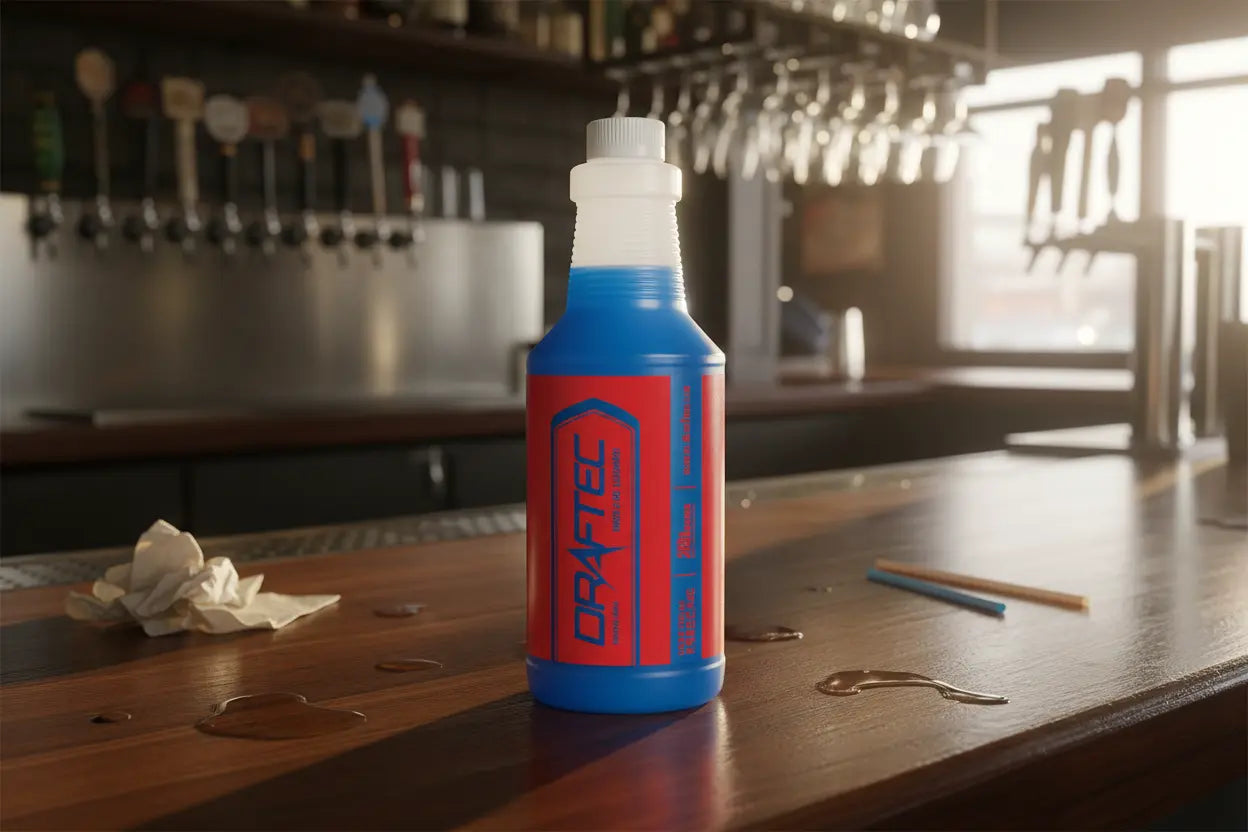
Turns bright blue in solution so you can see when cleaner reaches the faucet and when it has fully flushed out.

Removes beerstone and mineral deposits that alkaline cleaners leave behind. The red dye shows coverage and flush-out.

Clean up to four lines at once without pulling couplers. Built for high-volume bars and breweries that cannot afford downtime.

Professional recirculating pump that powers cleaning solution through long draw runs over 300 feet for a thorough, even clean.
Frequently asked questions
How often should I clean my draft beer lines?
At least every two weeks with a caustic cleaner, which is the Brewers Association standard, plus an acid clean every three months to remove beerstone.
What cleaner do I need?
A caustic (alkaline) cleaner for the regular every-2-weeks clean, and an acid cleaner every three months for beerstone. Dye-based cleaners make it easy to confirm a full flush.
Can I clean beer lines with just water?
No. Water alone will not dissolve the yeast, protein, and beerstone that build up inside draft lines. You need a purpose-made line cleaner.
What happens if I do not clean my beer lines?
Buildup of bacteria, mold, and beerstone makes beer taste off, slows pours, increases foaming waste, and over time can ruin the lines so they must be replaced.