Most bars lose 15 to 20 percent of every keg to overpours, giveaways, and beer that never gets rung up, and the owner usually only finds out when the beer cost line on the P&L creeps up with no clear reason why. A smart keg monitor fixes that by measuring every pour at the tap in real time and putting the numbers on your phone instead of a clipboard. Here is how that technology actually works, what it catches that a manual count never will, and what to look for if you are considering one.
In this article
- How much is draft beer loss actually costing you?
- What causes keg loss beyond a bad pour?
- How does a smart keg monitor actually work?
- What is variance reporting, and why does it matter?
- What alerts should a keg monitor send you?
- How hard is it to install a keg monitor?
- FAQ
How much is draft beer loss actually costing you?
Draft beer shrinkage runs higher than almost any other item behind the bar. Industry data puts typical inventory shrinkage at 15 to 20 percent, with draft beer sitting at the high end of that range because of foaming, line cleaning waste, and beer left in the bottom of a keg, and one widely cited estimate puts the average loss at 24 pints per keg (Bar-i). Without a way to measure pours against sales, that loss is invisible on paper. It just looks like beer cost creeping up for no clear reason.
| Loss rate | Pints lost per 1/2 bbl keg (~124 pours) | Estimated cost per keg (at $6/pint) |
|---|---|---|
| 15% (low end of industry range) | ~19 pints | ~$114 |
| 20% (common industry benchmark) | ~25 pints | ~$150 |
| Average bar (cited industry figure) | 24 pints | ~$144 |
These figures are illustrative, using commonly cited industry loss rates and a representative pour price. Your own numbers depend on your beer cost and menu pricing, which is exactly why measuring your actual pours matters more than working off an industry average.
Turn shrinkage into a margin number
Smart keg monitors show where beer is disappearing. The draft beer profit margin calculator shows what that loss is worth before you price equipment or change procedures. Use it to compare a high-waste keg against a cleaner-running keg, then decide whether the fix is monitoring, a FOB detector, line cleaning, or staff training.
Run the profit-margin calculator →What causes keg loss beyond a bad pour?
Three things drive most of the gap between what a keg should yield and what it actually yields:
- Overpours and giveaways. A slightly heavy pour or a round comped without a ticket looks harmless one drink at a time, but it adds up fast across a full keg and a full shift.
- Invisible shrinkage. Without pour-level data, there is no way to trace a shortfall back to a specific tap, shift, or bartender. It just shows up as a number that does not add up.
- No visibility. You cannot manage what you cannot measure. Most bars only find out a keg underperformed after it has already kicked, when it is too late to do anything about that keg specifically.
How does a smart keg monitor actually work?
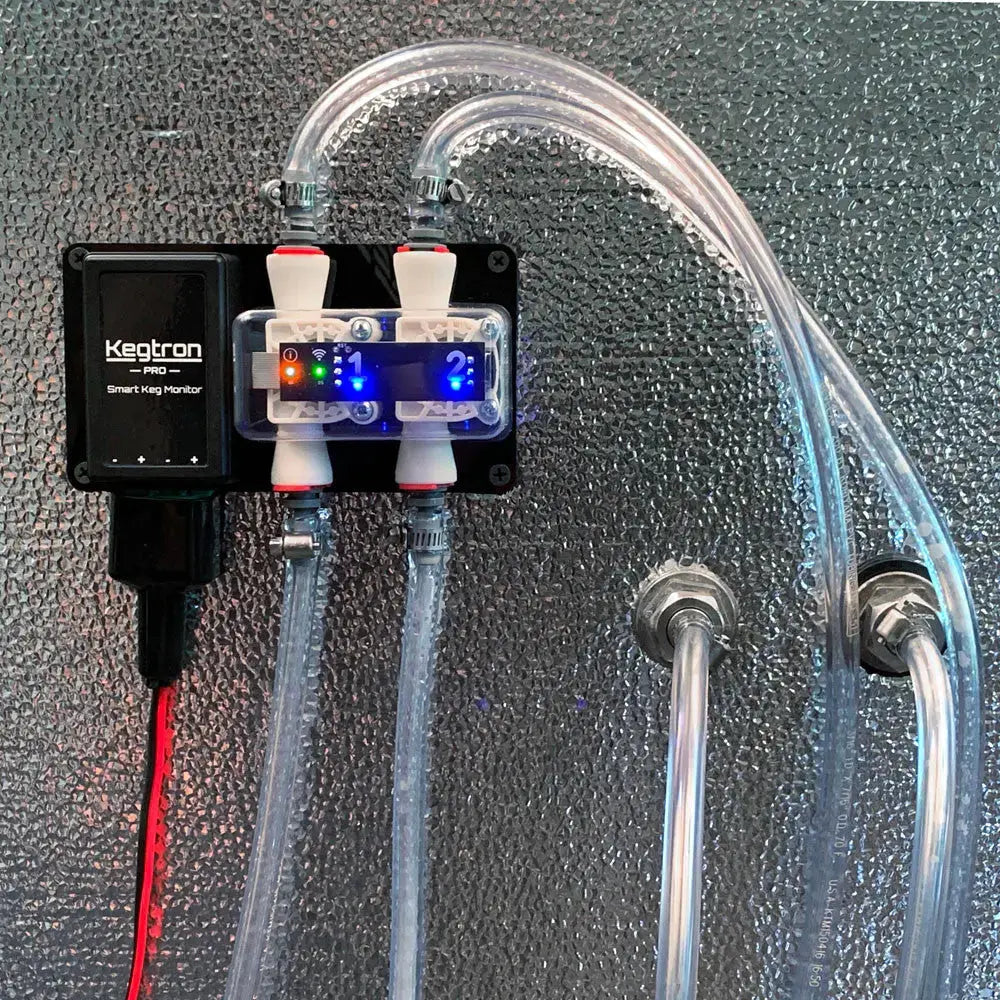
A system like Kegtron Pro puts a precision flow sensor on the beer line for every tap, so every pour is measured as it happens instead of estimated after the fact. A few things make this practical for a working bar rather than a lab setup:
- Flexible push-fit connections. The monitor adapts to your existing barrier or vinyl line with push-fit fittings, so you are not re-plumbing a working system to install it.
- Works with kegerator, direct-draw, and long-draw systems. The sensor hardware does not care how far the beer travels to the faucet.
- WiFi-connected, cloud-managed. No on-site hub, gateway, or PC to maintain. The monitor talks straight to the cloud dashboard.
- Any device access. Live levels, serving counts, and days on tap are visible from a phone, tablet, or computer, from the bar or from home.
- Modular by design. A two-tap kegerator and a hundred-tap taproom use the same building blocks, just more of them.
What is variance reporting, and why does it matter?
Variance reporting compares expected pour volume for each tap (based on what was rung on the POS) against actual volume the sensor measured, and shows the dollar impact of the gap. That is the number that tells you whether a tap is running heavy, whether pours are going out unrung, or whether a keg is simply underperforming its rated yield.
Smart serving detection makes that number trustworthy by merging top-offs into a single serving and splitting back-to-back pours into separate ones, so the count reflects real drinks poured rather than raw flow blips. Most systems also export the data as PDF or CSV for your bookkeeper, plus an open API (REST, WebSocket, or UDP) if you want to feed it into your own reporting. Where the system integrates with your POS directly, you get a straight comparison of what was served against what was sold, which is the fastest way to catch pours that never made it onto a ticket.
What alerts should a keg monitor send you?
The dashboard matters less than what it proactively tells you before you have to go looking. At minimum, expect email or text alerts for:
| Alert | What it catches |
|---|---|
| Low keg | Order the next keg before a tap runs dry mid-shift |
| Empty keg | Confirms a keg kicked so staff can swap it right away |
| After hours | Flags any pour recorded outside business hours |
| Device offline | Tells you the monitor lost connectivity before your data goes dark |
| Temperature | Warns if the cooler is running too warm or too cold |
| Cleaning overdue | Keeps you compliant with your own line cleaning schedule |
That cleaning alert is worth taking seriously on its own. Dirty lines cause foam and off flavors independent of anything a keg monitor measures, so pair the alert with an actual caustic clean every two weeks and an acid clean every six months, never stretching the caustic clean past six weeks.

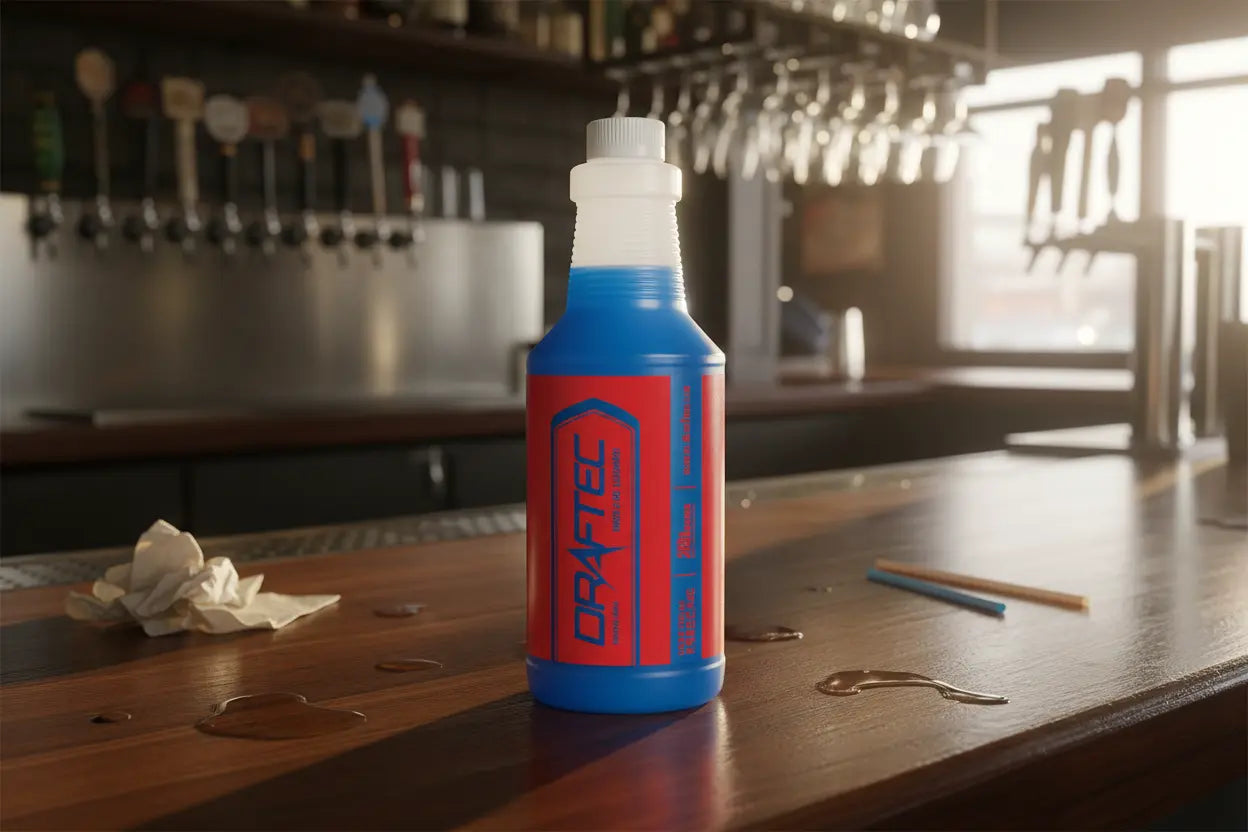
A standard caustic cleaner for the two-week cycle a "cleaning overdue" alert is reminding you to run.
How hard is it to install a keg monitor?
A system like Kegtron Pro is built to go in without re-plumbing your cooler:
- Connect. Provision the monitor to your WiFi from a phone.
- Install. Attach your existing beer lines to the keg monitor in the cooler using the push-fit connections.
- Monitor. Access the cloud dashboard from any device, from the bar or anywhere else.
Professional installation is available if you would rather not do it yourself, but most single-cooler setups are a same-day job.

Precision Swiss flow meters on two taps, self-install with John Guest push-fit connectors, ships free anywhere in the US. Cloud dashboard subscription required separately, priced at $2 per tap per month, $20 per tap per year, or $60 per tap as a one-time lifetime fee.

The same precision flow monitoring across four taps in one modular unit, also self-install and shipped free anywhere in the US. Cloud dashboard subscription required separately, priced at $2 per tap per month, $20 per tap per year, or $60 per tap as a one-time lifetime fee.
Frequently asked questions
How much beer does the average bar lose per keg?
Industry estimates put draft beer shrinkage at 15 to 20 percent per keg, with one widely cited figure putting the average loss at 24 pints per keg. Draft tends to run higher than packaged beer because of foaming, line cleaning waste, and beer left in the bottom of the keg.
Do I need a POS system to use a keg monitor?
No. A keg monitor works standalone, measuring pours and reporting levels and variance on its own. POS integration is an added layer that compares what was poured against what was actually rung up, which is useful but not required to get value from the monitor.
Will a keg monitor work with my existing beer lines?
Most systems use flexible push-fit connections that adapt to standard barrier or vinyl line, and work on kegerator, direct-draw, and long-draw systems alike. You are attaching your existing lines to the monitor, not replacing your draft system.
How many taps can one keg monitor system handle?
These systems are modular, so the same hardware scales from a couple of taps to a building with hundreds. Kegtron Pro, for example, comes in a dual-tap unit and a quad-tap unit that combine to fit any bar size.
Can I get alerted before a keg runs empty?
Yes. Low keg and empty keg alerts are standard on smart keg monitoring systems, sent by email or text so staff can order or swap a keg before a tap actually runs dry mid-shift.
Does the Kegtron Pro ship free, and is there an ongoing cost?
Both the Dual Tap and Quad Tap Kegtron Pro units ship free anywhere in the US. The hardware is a one-time purchase, but the cloud dashboard runs on a separate subscription, priced at $2 per tap per month, $20 per tap per year, or $60 per tap as a one-time lifetime fee, with instructions provided at purchase.
Related guides
- Do You Need a CO2 Monitor for Your Bar? OSHA Rules and How to Choose One
- How to Clean Beer Lines
- Maintain Your Beer Lines Effectively
Curious what keg monitoring would show you?
Kegtron Pro ships free anywhere in the US on both the Dual Tap and Quad Tap units. Tell us your tap count and we will help you pick the right size.
Shop Kegtron Pro →Expert advice and free technical support on every order.