
Yes. If your bar, brewery, or restaurant stores or dispenses CO2 in an enclosed space, a walk-in cooler, keg room, or basement, you need a CO2 monitor. CO2 is colorless and odorless, so a slow leak from a regulator, line, or tank fitting can raise concentrations to a dangerous level with no visible warning. OSHA's permissible exposure limit is 5,000 ppm as an 8-hour time-weighted average, and levels above 5 percent (50,000 ppm) can be fatal within minutes. A fixed CO2 safety monitor with an audible and visual alarm is the only reliable way to catch a leak before someone walks into a room that has become unsafe to breathe.
In this article
- Why is CO2 dangerous in a bar or brewery?
- What does OSHA require for CO2 exposure?
- Where does CO2 build up in a draft beer system?
- What should I look for in a CO2 monitor?
- How much does a CO2 safety monitor cost?
- FAQ
Why is CO2 dangerous in a bar or brewery?
CO2 is heavier than air, so it settles and pools in low spots, walk-in coolers, keg rooms, and basements, exactly where draft systems store their tanks. Because it has no color and no smell, a leak can raise the concentration in a small enclosed room well past a safe level before anyone notices anything wrong. Walk-in coolers are treated as confined spaces under OSHA standards for this reason. Documented workplace fatalities have occurred when staff or delivery installers entered a cooler that had filled with leaked CO2 from a damaged line or fitting, with no warning before they lost consciousness.
What does OSHA require for CO2 exposure?
OSHA sets a permissible exposure limit (PEL) of 5,000 ppm as an 8-hour time-weighted average (TWA), and 30,000 ppm as a ceiling for any 10-minute period. OSHA's General Duty Clause also requires employers to keep the workplace free of recognized hazards, which is generally interpreted to include proper ventilation and gas monitoring anywhere CO2 is stored or used in volume. Most local fire codes go further: municipalities that follow the International Fire Code (IFC) or National Fire Protection Association (NFPA) guidelines commonly require a fixed CO2 monitor in any room storing more than 100 lbs of compressed CO2, which is roughly two to three standard 20 lb cylinders, a threshold many bars and breweries cross without realizing it.
| CO2 level | Effect |
|---|---|
| 5,000 ppm (0.5%) | OSHA 8-hour exposure limit (TWA) |
| 15,000 to 30,000 ppm | Headache, dizziness, rapid breathing |
| 50,000+ ppm (5%+) | Can be fatal within minutes |
Where does CO2 build up in a draft beer system?
Walk-in keg coolers are the highest-risk spot in almost every bar, since they combine stored CO2 tanks, limited air exchange, and a door that is often kept shut. Other common trouble spots include:
- Basement or storage room tank banks, especially bulk CO2 systems with multiple cylinders
- Regulator and fitting connections, where a worn washer or loose flare nut leaks slowly over time
- Beer line and gas line runs through enclosed chases or behind walls
A slow leak at a single fitting can go unnoticed for weeks since it does not affect pour quality right away, which is exactly what makes fixed monitoring more reliable than relying on staff to notice a problem.

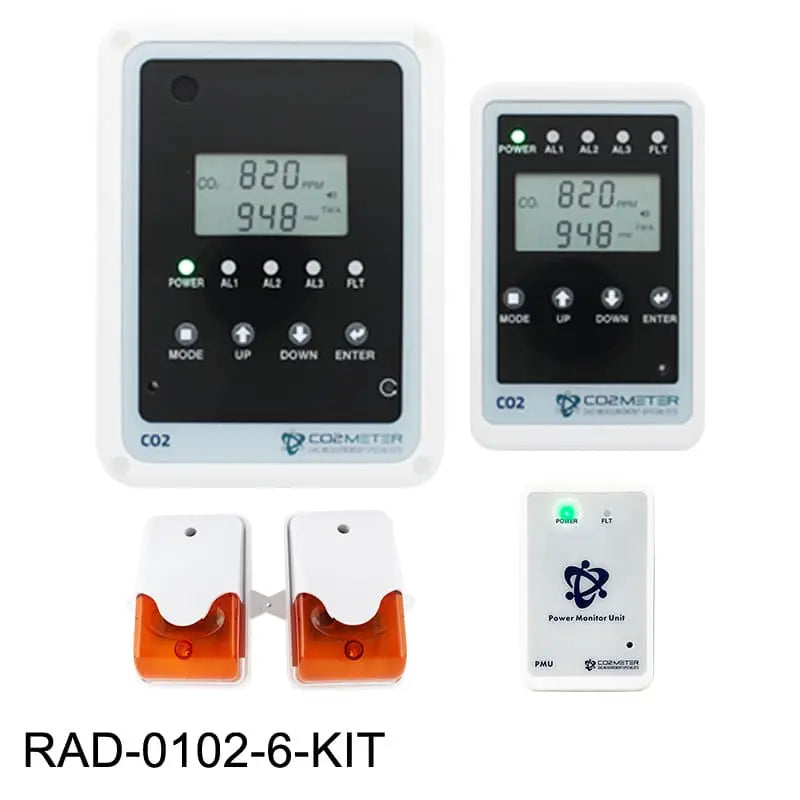
Digital display, horn/strobe alarm, and power-loss alert in one kit. Plug-and-play install, about 30 minutes for a standard setup.
What should I look for in a CO2 monitor?
Not every CO2 monitor is built for a commercial installation. Look for these features before you buy:
- UL listing. Confirms the unit meets recognized safety testing standards, often required for insurance and permitting.
- Multiple configurable alarm levels. A single-threshold alarm gives you no warning before a real emergency. Look for at least two or three levels, including one set at or below OSHA's 5,000 ppm TWA.
- Audible and visual alarms. A horn alone will not help in a loud kitchen or storage area, a strobe light matters just as much.
- Relay outputs. The ability to trigger a ventilation fan or a fire panel automatically, rather than relying on someone hearing the alarm and reacting manually.
- Power-loss alert. A monitor that cannot warn you when it loses power is a monitor that can fail silently.
How much does a CO2 safety monitor cost?
Basic single-point CO2 detectors start under $200, but most of those are portable units without fixed alarm relays or ventilation control, better suited to spot-checking than full-time monitoring. A complete fixed monitoring kit with a digital display, horn/strobe alarm, and power monitoring typically runs $600 to $900 installed. That is a small cost against the alternative: a workers' compensation claim, a fatality investigation, or a failed fire inspection.

Most CO2 leaks start at a worn regulator or a loose flare connection. This dual-gauge double-body regulator runs two products at different pressures from one CO2 source, and it is on clearance right now.
Frequently asked questions
Is a CO2 monitor legally required for bars?
Requirements vary by jurisdiction, but many municipalities that follow IFC or NFPA guidelines require a fixed CO2 monitor in any room storing more than 100 lbs of compressed CO2. Check with your local fire marshal, and remember that OSHA's General Duty Clause applies regardless of local code specifics.
What CO2 level is dangerous?
OSHA's 8-hour exposure limit is 5,000 ppm. Symptoms like headache and dizziness typically start in the 15,000 to 30,000 ppm range, and concentrations above 50,000 ppm (5 percent) can be fatal within minutes in an enclosed space.
Where should a CO2 monitor be installed?
Since CO2 is heavier than air, mount the sensor low, generally 12 to 18 inches off the floor, in the room where tanks are stored or gas lines run. A walk-in cooler or keg room is almost always the highest-priority location.
How long does it take to install a CO2 monitor?
Most fixed CO2 monitor kits are plug-and-play with pre-configured alarm levels from the factory. A standard single-room installation typically takes about 30 minutes, no electrician or professional installer required for a basic setup.
Can I use a portable CO2 detector instead of a fixed monitor?
Portable detectors have a place for spot-checking during service or delivery, but they do not provide continuous protection for staff who enter a storage room throughout the day. A fixed monitor with a wall-mounted alarm covers the room at all times, which is what most codes and insurers expect.
How often should a CO2 monitor be tested or serviced?
Test alarm function monthly and confirm the sensor reads a baseline near 400 to 800 ppm (normal indoor air) when the room is clear. Most fixed CO2 sensors have a rated service life of around 15 years before the sensor itself needs replacing.
Related guides
- What You Should Know About Planning a Beverage System
- Blended Gas: The McDantim Gas Blender
- CO2 Tank Life Estimator
Protect your staff and your business
A CO2 leak gives no warning on its own. A fixed monitor does the warning for you.
Shop the CO2 Storage Safety Kit →Expert advice and free technical support on every order.