


Description
When your keg room or walk-in cooler holds compressed CO2, a slow leak can reach dangerous concentrations before anyone notices. The CO2Meter RAD-0102-6-KIT gives bar and brewery operators a complete, code-compliant monitoring system that watches ambient CO2 levels around the clock and triggers audible and visual alarms before staff are ever at risk.
CO2 monitor for Complete Storage Safety
Everything you need, out of the box
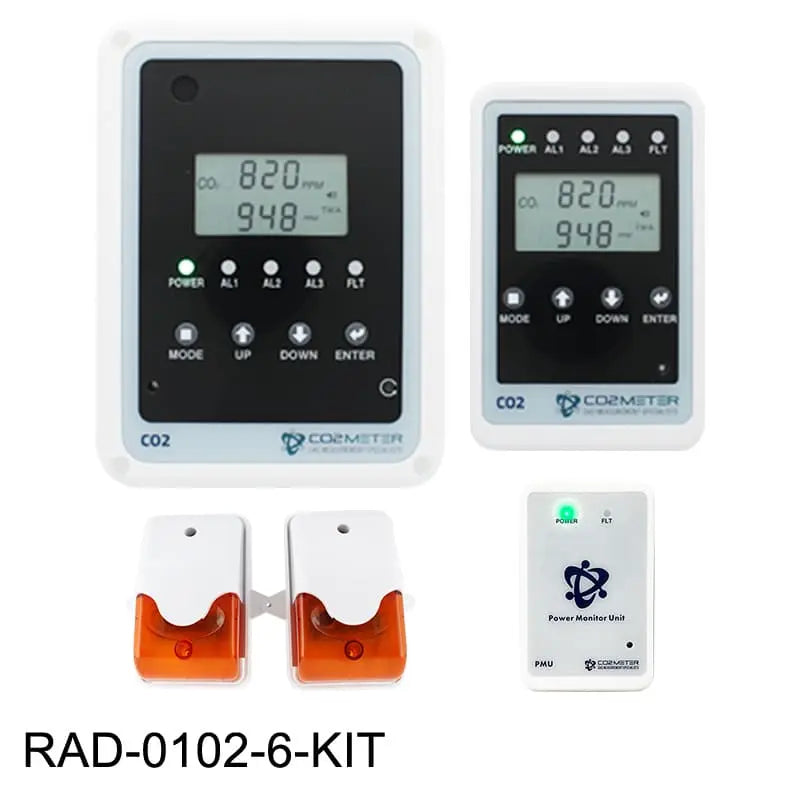
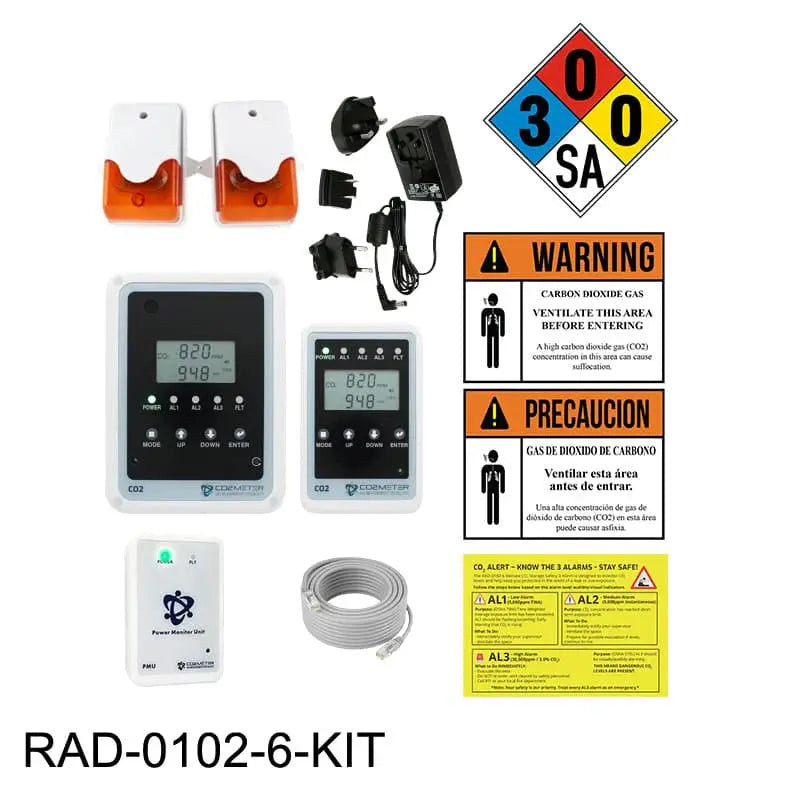
- RAD-0102-6-HS2 Remote CO2 Storage Safety Alarm — digital LCD display with real-time ppm readout
- CM-HS2 Horn/Strobe Alert Combo — 90+ dB audible alarm paired with a visual strobe for dual-mode alerting
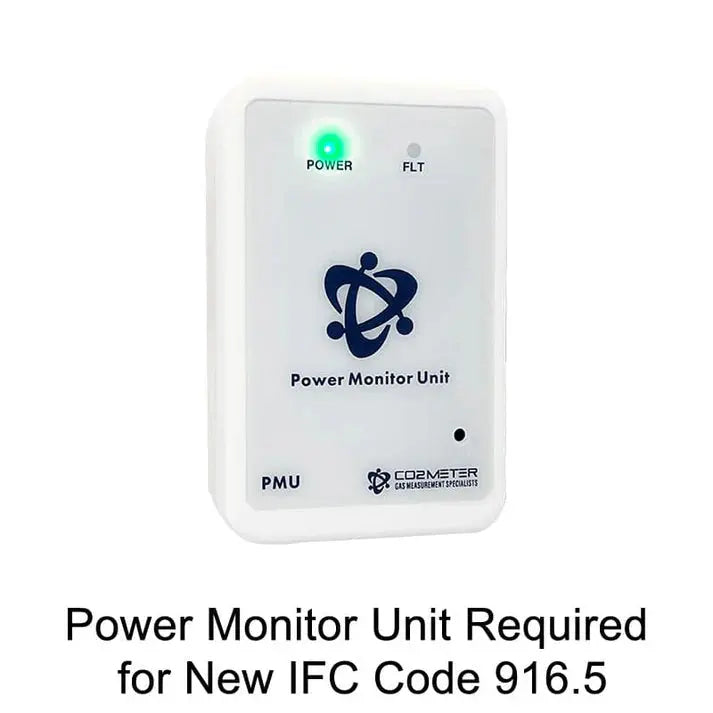
- RAD-PMU Power Monitor Unit — alerts staff immediately on any power loss to the system
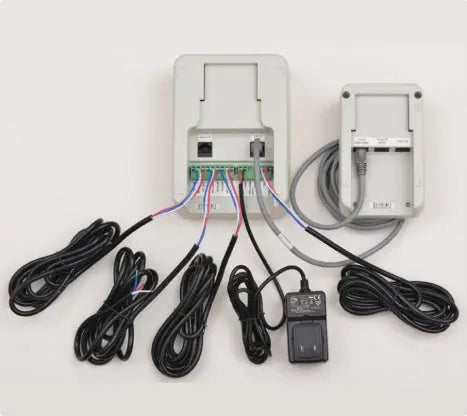
- 28 ft of CAT5 cable included — extendable to 300 ft for larger installations
- Required bilingual safety signage — English/Spanish, satisfies most local posting requirements
Key specs
- Measurement range — 0 to 5% (50,000 ppm) CO2
- Three configurable alarm levels — 5,000 ppm TWA, 5,000 ppm, and 3% CO2
- Alarm response time — under 60 seconds
- Sensor life — 15 years
- Operating temperature — 32–122°F (0–50°C)
- Power — 110–220VAC plug-and-play, or 24VDC hardwired
- Dimensions — 6.5 × 5.0 × 2.5 inches
- Install time — approximately 30 minutes for a standard installation
- Certifications — UL listed; meets NFPA, IFC, NBIC, OSHA, and NIOSH requirements
- Warranty — one-year manufacturer warranty
System compatibility
Alarm relays can trigger a ventilation fan or signal a fire panel automatically, satisfying most local code requirements for CO2 storage rooms. Any facility storing more than 100 lbs of compressed CO2 — roughly two to three standard 20 lb cylinders — should have continuous monitoring in place. The plug-and-play design works with standard 110–220VAC outlets, and the CAT5 cable run can be extended to 300 ft to cover larger keg rooms or multi-zone installations.
Frequently asked questions
What codes require CO2 monitoring in a commercial space?
CO2 monitoring is required or strongly recommended under several codes and standards, including NFPA, IFC, NBIC, and OSHA/NIOSH exposure limits. Many municipalities also require a monitor in any room used to store beverage gas.
Where should the sensor be mounted in a walk-in cooler or storage room?
Mount the sensor unit inside the walk-in or storage room, low to the ground, since CO2 is heavier than air and settles near the floor. The remote display typically goes outside the door so staff can check levels before entering.
What do the alarm levels on this kit mean?
The kit uses three configurable alarm levels: an early alert for elevated CO2, a secondary warning that calls for more ventilation or an equipment check, and a high level evacuation alarm that means the room needs to be cleared right away.
Can this monitor trigger an exhaust fan or connect to a fire alarm panel?
Yes. It includes three built-in relays that can activate exhaust fans, horn and strobe alarms, fire panels, or a building automation system automatically.
Do I need a professional to install it?
Not for a standard single room setup. It is plug-and-play and typically takes about 30 minutes. If you are tying it into existing ventilation controls or a fire panel, it is worth having an electrician handle that part.
How often does the sensor need calibration?
Follow the manufacturer's recommended calibration schedule based on your usage conditions. Most commercial CO2 sensors need periodic recalibration to stay accurate over their 15 year rated life.
Do I need more than one sensor for my building?
If you have multiple storage rooms, coolers, or keg rooms, you likely need a sensor in each one. Your facility layout and the number of separate enclosed spaces determine how many units you need.
Reliable Monitoring for Storage Environments
The CO2Meter RAD-0102-6-KIT is a complete CO2 monitor
solution designed to help protect storage areas where carbon dioxide levels must be watched closely. It is built for environments that need dependable gas detection and quick awareness of changing air conditions. This kit helps users maintain safer storage spaces by providing clear monitoring of CO2 levels before they become a problem. Whether used in commercial facilities, industrial storage, or specialized work areas, it gives a practical way to support safety goals and reduce risk from elevated carbon dioxide exposure.
Complete Kit for Easier Setup and Use
This monitoring kit is made to simplify installation and operation, giving users the tools they need in one package. Instead of sourcing separate parts, the RAD-0102-6-KIT offers a complete setup for carbon dioxide safety monitoring. That makes it a smart choice for teams that want fast deployment and dependable performance. The system is suitable for storage locations where staff need a clear warning when CO2 reaches unsafe levels. Its straightforward design helps users keep control of their environment while saving time during setup, which is especially useful in busy operations that depend on consistent safety practices.
Supports Safer Working Conditions
High carbon dioxide levels can create serious safety concerns, especially in enclosed or poorly ventilated spaces. A trusted CO2 monitor
helps provide early awareness so action can be taken before conditions become hazardous. The CO2Meter RAD-0102-6-KIT is intended to support safer working conditions by making gas level tracking more manageable. It gives facility managers and safety teams a better way to monitor air quality in storage areas and respond quickly when needed. This added visibility can help reduce downtime, improve compliance efforts, and create a more responsible safety culture across the workplace.
Built for Practical Industrial Safety Needs
Designed with real-world use in mind, this safety monitoring kit fits the needs of operations that rely on accurate gas detection. It is a practical option for sites that store materials in controlled environments and require reliable monitoring around the clock. The RAD-0102-6-KIT helps users focus on prevention by keeping CO2 levels visible and easier to manage. Its value comes from combining useful monitoring features with a complete kit format that supports efficient safety planning. For businesses that want a dependable carbon dioxide monitoring solution, this product delivers a strong balance of convenience, protection, and long-term utility.
Product documents
You may also like
Order and get 849 reward points
Earn 100 points by signing up for our rewards program