A kegerator has six core parts: the keg coupler, the CO2 tank and primary regulator, the gas line, the beer line, the tower shank, and the faucet. CO2 pushes beer out of the keg through the coupler, up the beer line, through the shank, and out the faucet into the glass. Most systems dispense standard ales and lagers at 10 to 12 PSI and hold the keg at about 38°F. If a part in that chain wears out or gets the wrong fitting, the pour suffers, so knowing what each piece does makes troubleshooting and replacement a lot less guesswork.
In this article
- What parts make up a kegerator
- What is a keg coupler and which type do you need
- What do the tower and shank do
- Which beer faucet should you use
- How does the CO2 regulator work
- How to set up a kegerator step by step
- How often should you clean a kegerator
- FAQ
What Parts Make Up a Kegerator?
A kegerator is a refrigeration cabinet paired with a draft dispensing system. The cooling side keeps the keg cold. The dispensing side, everything from the coupler to the faucet, is what actually gets beer into the glass in good condition. Here is the full list at a glance before we go part by part.
| Part | What It Does | Typical Price | Replace When |
|---|---|---|---|
| Keg coupler | Locks onto the keg valve, feeding gas in and pulling beer out | $30 to $70 | Leaking at the seal, hard to lock on, worn probe |
| CO2 primary regulator | Controls pressure leaving the CO2 tank | $70 to $100 | Gauge stuck, won't hold pressure, leaking fittings |
| Tower shank | Routes the beer line from the tower through to the faucet | $12 to $40 | Corrosion, stripped threads, tower or faucet swap |
| Faucet | The valve beer pours through into the glass | $20 to $85 | Sticky handle, foamy or flat pours, sanitary upgrade |
| Beer line | Carries beer from the coupler to the faucet | Varies by length | Every 5 to 7 years, sooner if off flavors show up |
| Drip tray | Catches spills and overflow below the faucet | $85 to $300+ | Cosmetic wear, or adding a glass rinser |
What Is a Keg Coupler and Which Type Do You Need?
The coupler is the fitting that locks onto the top of the keg. It does two jobs at once: it feeds CO2 into the keg to push the beer, and it pulls the beer out through a probe. Get the coupler wrong and nothing downstream matters, the keg simply will not pour.
In the US, the vast majority of domestic kegs use a Sankey D coupler, sometimes called a US Sankey. European imports and some craft kegs use a different fitting, so it is worth checking the keg valve before you order. A worn coupler probe or a hardened seal is one of the most common reasons for a slow, foamy, or gas-leaking pour, and it is usually a much cheaper fix than people expect.

Full 304 stainless body and probe, lever-action for fast tool-free connects, works across beer, wine, cold brew, and more.
Not sure which fitting your keg uses? Our keg coupler guide by brand walks through every major coupler type so you order the right one the first time.
What Do the Beer Tower and Shank Do?
The tower is the column that sits on top of the kegerator or bar and holds the faucet at pouring height. Inside it, the shank is the metal fitting that actually passes through the tower wall, connecting the beer line on one side to the faucet on the other. The shank has teeth so the faucet connects directly onto it, and a chrome sleeve screws to the threads on the faucet and finishes the look on the outside of the tower.
Shanks corrode or develop stripped threads over years of cleaning cycles, and that is usually the reason a faucet starts leaking around its base even after the faucet itself has been serviced. Swapping the shank assembly is a quick fix and far cheaper than replacing the whole tower.

Complete single-tap shank kit: shank, barbed elbow fitting, and curved chrome sleeve, 5/8"-18 UNF thread for a standard faucet.
Which Beer Faucet Should You Use?
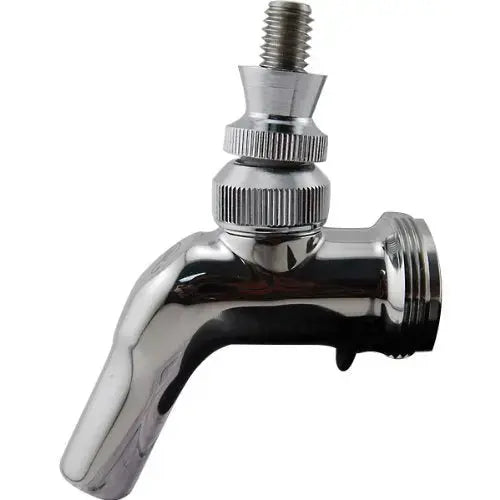
The faucet is the last part beer touches before the glass, so its design has an outsized effect on pour quality. Standard faucets have an exposed valve shaft that can trap beer between pours, which is where stale, flat-tasting first sips and mold buildup usually start. Forward-sealing faucets close off that shaft from the air, so the faucet stays cleaner and the first pour of the day tastes the same as the last one from the night before.

304 stainless, NSF listed, forward-sealing design that drains fully after every pour so beer never sits and goes stale.
How Does the CO2 Regulator Work?
The primary regulator mounts on top of the CO2 tank and steps the pressure down from the tank's full storage pressure to whatever the beer line needs, typically 10 to 12 PSI for standard ales and lagers at kegerator serving temperature. If you run more than one tap off a single tank, a secondary regulator downstream in the cooler lets you fine-tune each line individually without touching the primary.
A 0 to 60 PSI regulator covers the standard range for the vast majority of draft beer setups. Nitrogenated beers, long beer line runs, and a handful of specialty applications call for a higher-range 0 to 160 PSI unit instead, so check what your beer style and line length actually need before you buy. Curious how long a standard CO2 tank will last at your pour volume? Our CO2 tank life estimator gives you a quick number to plan around.

UL listed, CGA-320 inlet for standard US CO2 tanks, the standard pressure range for lager and ale dispensing.
How Do You Set Up a Kegerator Step by Step?
Once you have the right parts on hand, setup is straightforward.
- Chill the cabinet first. Run the kegerator empty for a few hours so it is already near 38°F before the keg goes in.
- Check the coupler fitting. Confirm you have a Sankey D coupler for a standard domestic keg, or the correct European fitting for an import.
- Connect the coupler and lock it down. Line up the coupler with the keg valve and turn or pull the lever until it locks. You should hear or feel it seat fully.
- Attach the gas line and set pressure. Connect the CO2 tank through the primary regulator to the coupler's gas inlet, then set 12 PSI as a starting point for standard ales and lagers.
- Let the keg settle. Give it at least 24 hours at temperature before pouring so the beer is fully cold and the carbonation has time to stabilize.
- Pour and adjust. If the first pours run foamy, raise the pressure a pound or two and check line length and temperature. If they run flat, raise it slightly.
How Often Should You Clean a Kegerator?
Clean beer lines with a caustic beer line cleaner every 2 weeks, or every time you change kegs on a lower-volume line, and run an acid-based cleaner every 6 months to clear out beer stone and mineral buildup that caustic alone will not touch. Skipping cleaning is the single biggest cause of off flavors, wild foam, and short shelf life on an otherwise perfectly good kegerator. Our full walkthrough on how to clean beer lines covers the step-by-step process.
Frequently Asked Questions
What parts do I need to replace most often on a kegerator?
The coupler seal, the faucet, and the beer line wear out fastest since they see the most contact with beer and cleaning chemicals. Tower shanks and CO2 regulators last much longer but should be checked any time you see a leak or a pressure that will not hold.
What PSI should I set my kegerator CO2 regulator to?
Start at 12 to 14 PSI for most ales and lagers at around 38°F. Nitro stouts, high-carbonation styles, and longer beer line runs need a different setting, so treat 12 to 14 PSI as a starting point to fine-tune, not a fixed number.
What is the difference between a primary and secondary CO2 regulator?
A primary regulator sits on the CO2 tank and sets the overall pressure feeding your system. A secondary regulator sits downstream, usually inside the cooler on an individual line, so you can fine-tune one tap without changing pressure to the rest of the system.
Why is my keg coupler leaking gas or beer?
Most coupler leaks come from a worn or hardened seal, or the coupler not locking fully onto the keg valve. Replacing the seal or the coupler itself is usually the fix, and it is far cheaper than most people expect.
How long does a tapped keg stay fresh in a kegerator?
A tapped keg kept cold and under CO2 pressure typically stays fresh for 45 to 60 days. Once air gets into the line instead of CO2, quality drops off within days, which is another reason a tight coupler seal and a properly set regulator both matter.
How often should I clean my kegerator beer lines?
Run a caustic beer line cleaner every 2 weeks, and follow up with an acid-based cleaner every 6 months to remove mineral scale that caustic cleaner leaves behind. Clean the coupler and faucet at the same time, not just the lines.
Related Guides
- Beer Faucet Parts: The Complete Guide to Every Component and Repair
- Parts of a Draft Beer System: How They Work
- How to Clean Beer Lines
- Do You Need a CO2 Monitor for Your Bar?
Need a Part for Your Kegerator?
From couplers to CO2 regulators, we stock the parts that keep a kegerator pouring right, and our team can help you match the fitting to your setup.
Shop Kegerator Parts →Free technical support on every order. Just ask.