


Description
Know Instantly If Your Draft Beer System Has a Gas Leak
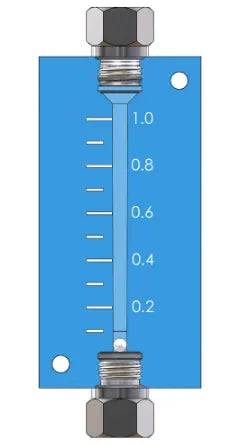
The McDantim Single In-Line Leak Indicator (ILLI) is a simple, reliable tool for monitoring gas flow in commercial draft beer systems. Installed directly in the gas supply line, it gives operators an immediate visual indication of whether gas is flowing when it shouldn't be — helping you find and fix leaks before they waste CO₂, nitrogen, or blended gas.
Key Features
- Instant visual leak detection — a floating ball rises when gas is flowing at rest, confirming a leak is present
- Leak severity indication — ball height corresponds to the rate of gas flow, helping you gauge the size of the leak
- 5/16" barbs pre-installed — ready to connect to standard draft beer gas tubing with no additional fittings required (unless otherwise noted)
- Works with CO₂, nitrogen, and blended gas — compatible with all common draft beer gas sources
- No electronics, no calibration — purely mechanical operation for reliable, maintenance-free performance
- Built-in debris screens — small screens protect the ball from debris that could cause it to stick
How It Works
When no beer is being poured and gas should not be flowing:
- Ball resting at the bottom — no leak detected
- Ball floating in the tube — gas is flowing; a leak is present
- Higher ball position — indicates a larger leak
Check it before your first pour of the day or after your last. As you repair leaks, the ILLI confirms when the issue is fully resolved.
Ideal For
Bars, restaurants, breweries, stadiums, and any commercial draft beer operation running CO₂, nitrogen, or blended gas systems. Especially valuable in nitrogen generator setups, where undetected leaks force compressors to run continuously and can lead to premature failure.
Specifications
- Barb Size: 5/16" (pre-installed unless otherwise noted)
- Configuration: Single in-line
- Manufacturer: McDantim
- Product Type: Leak Detection & Testing Equipment
Resources
From the Manufacturer
"I want to turn the whole thing upside down"
For so long, people have been using “detector” for the nomenclature, which is patently wrong. This device shows gas flow, regardless of the gas flowing through the tubes. Detectors sometimes act more like sniffers, which just makes me think of a cartoon bloodhound, and can be purchased at your local hardware store. But for leak detection in draught beverage systems, we like to use our Pressure Degradation test (on our YouTube, shameless plug) or soapy water.
The numbers next to the tube don’t explain the liters per minute or cubic feet per hour you’re losing. The levels on the ILLI indicate the severity of the gas flow. And there are some cute little screens to inhibit any debris from getting into said tubes that could make the ball stick. Making sure the ILLI is installed correctly for the gas supply flow is vitally important. Gas Flow + Plastic Ball = Float. Gas Flow – Plastic Ball + Gravity = Drop.
The ILLI is a marvelous addition to your gas supply system, and, when installed correctly, can help you identify the gas flow so you can find and fix leaks as soon as they appear.
Written by Kayla Mann; June 2019
You may also like
Order and get 153 reward points
Earn 100 points by signing up for our rewards program