
EMPTY DOM REMOVE PROTECTOR

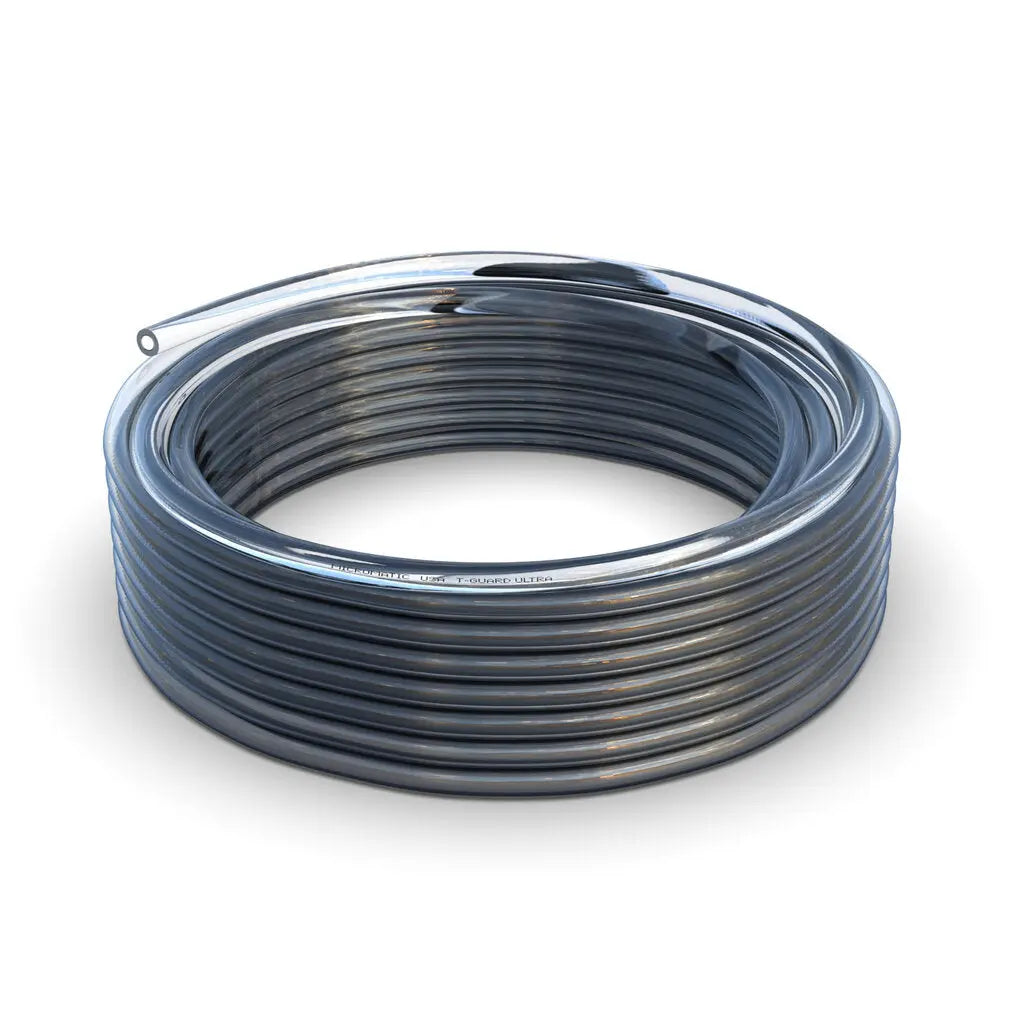
Micro Matic T-Guard Ultra® Barrier Vinyl Beer Line | 1/2" I.D. | NSF/FDA Compliant | 100' Spool

Micro MaticSKU: 826-551C1200TG

EMPTY DOM REMOVE PROTECTOR
...
......
...
Price:
Sale price$152.78
Stock:
In stock
EMPTY DOM REMOVE PROTECTOR

Description

The T-Guard Ultra® is a next-generation barrier vinyl hose engineered for draft beer systems that demand consistent flavor integrity and easy handling. Its multi-layer construction combines vinyl-like flexibility with the performance of barrier tubing—making it the go-to upgrade from standard vinyl line for breweries, bars, and beverage distributors.

Why T-Guard Ultra®?

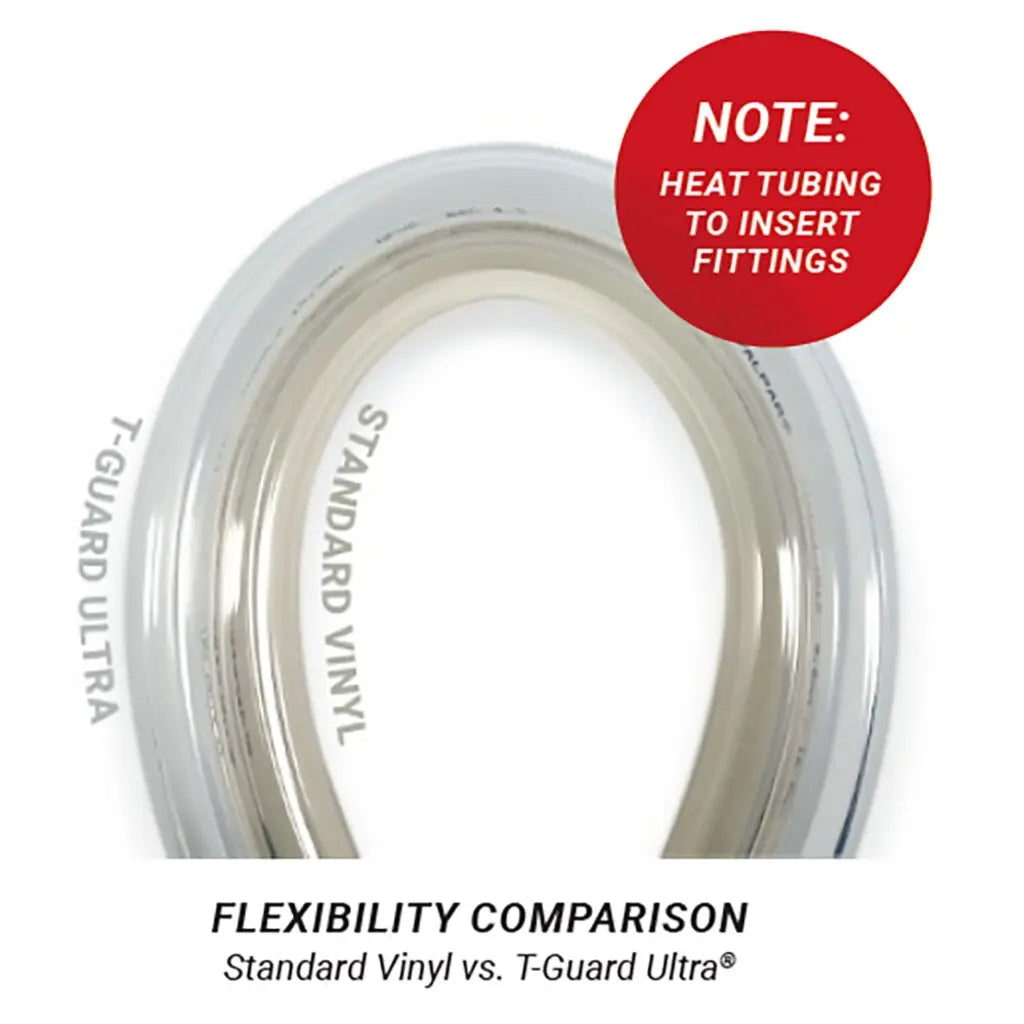
Standard vinyl absorbs flavors, harbors bacteria, and degrades pour quality over time. The T-Guard Ultra® addresses all three with a copolymer inner liner that is 85% more hygienic than vinyl, virtually eliminates flavor carryover, and resists kinking during installation and service.

Features

  • Ultra-smooth copolymer liner — 85% more hygienic than standard vinyl
  • Virtually eliminates flavor absorption for cleaner-tasting pours
  • Superior kink resistance for easier routing and installation
  • Vinyl-like flexibility with barrier tubing durability
  • Compatible with beer, wine, cider, cold brew, and all beverage types
  • FDA and NSF compliant

Specifications

  • Inner Diameter: 1/2"
  • Restriction: .025 lbs per foot
  • Compatible Clamp: 802-STP-210
  • Spool Length: 100'
  • Also available in: 50'
... rest of section ...

Frequently Asked Questions

For most draft systems, yes — but it depends on the setup.
Where barrier tubing clearly wins:
The biggest factor is long draw systems where beer travels any significant distance from the cooler to the faucet. In those runs, you're bundling beer lines with glycol lines inside a trunk line, and temperature stability and flavor protection over that distance matter a lot. Barrier tubing's lower permeability keeps CO₂ absorbed into the beer more stable, which translates directly to better pours and less waste from foamy, out-of-balance beer.
For a wholesale/distribution context like yours, it's also the product you'd recommend to serious bar operators — it's what the better installations spec out.
Where the math gets closer:
Short draw systems — a kegerator or a simple under-bar setup where the beer line is 5 feet or less — the quality difference is real but smaller. Vinyl works fine for years in those applications if it's cleaned properly and replaced on schedule.
The cost comparison over time:
Barrier tubing costs more upfront, but when you factor in longer replacement intervals (3–5 years vs. 1–2 for vinyl), less beer waste from flavor issues, and fewer service calls related to line problems, most operators in a commercial setting come out ahead. The per-foot price difference becomes pretty marginal spread over a 4-year lifespan.
Bottom line: For any commercial long draw installation, barrier tubing is the right call and worth the premium. For a basic short draw home or low-volume setup, vinyl is serviceable and the savings are real.

Barrier tubing (also called barrier trunk line or python line) lasts significantly longer than standard vinyl tubing in draft beer systems.
Barrier tubing is typically rated for 3–5 years of service life, and in well-maintained systems it can go even longer. The multilayer construction — usually a polyethylene or nylon inner liner bonded with an outer vinyl jacket — resists beer stone buildup, absorbs less CO₂, and doesn't take on flavors or odors the way vinyl does. It also holds up better to regular line cleaning chemicals.
Standard vinyl tubing is generally recommended for replacement every 1–2 years, and some operators on tight cleaning schedules push it to 3 years, though you'll often see quality and flavor degradation before that. Vinyl is porous, so it absorbs off-flavors, harbors bacteria in micro-scratches over time, and can impart a plastic taste to beer as it ages.
Practical rule of thumb: If you're running a high-volume bar with frequent line cleaning, barrier tubing pays for itself pretty quickly just in extended replacement intervals and better beer quality. For lower-volume or seasonal operations on standard vinyl, annual inspection and replacement every 1–2 years is the safer call.
The other variable is cleaning frequency — lines cleaned every 2 weeks per Brewers Association guidelines will last longer than lines cleaned monthly or less, regardless of tubing type.

Customer support

Call us at 800-821-0114 or chat box below

Send a message

Email us at info@wholesalebeerparts.com

EMPTY DOM REMOVE PROTECTOR

You may also like

Recently viewed