Choosing a beer tower starts with the beer route, not the finish. If the keg sits in a refrigerated cabinet directly below the bar, an air-cooled tower is the correct choice for that direct-draw application — not a substitute for a remote cooling plan. If beer travels from a remote walk-in or has to stay cold through a wall or long run, the tower must be part of a properly designed glycol-cooled system. From there, choose the faucet count, mounting method, faucet material, and the hardware needed to connect the tower without creating a warm, foamy first pour.
This beer tower buying guide is for bar operators, installers, and breweries. Choose a tower that fits the dispense route.
In this guide
- How many faucets should a beer tower have?
- Should you choose an air-cooled or glycol-cooled beer tower?
- What mounting style fits the bar?
- What parts are needed with a beer tower?
- Frequently asked questions
1. Match faucet count to your beer lineup
Start with the number of beers you need to serve at the same time. One faucet equals one product on tap. A two or three faucet tower is a clean fit for a small direct-draw setup. Larger back bars and wall-mounted stations need enough faucets for the current lineup, plus a layout that leaves room to service shanks, lines, and fittings behind the tower.
Do not choose a tower only by the number of handles you can fit across the bar. The real limit is the cooling and beer-line system behind it. A multi-faucet tower on a remote system needs each line to stay cold all the way to the shank. For a new installation, map the beer list, measure the actual coupler-to-faucet route, and confirm whether the beer is direct draw, forced-air, or glycol-cooled before ordering.
| System situation | Tower direction | Current WBP example |
|---|---|---|
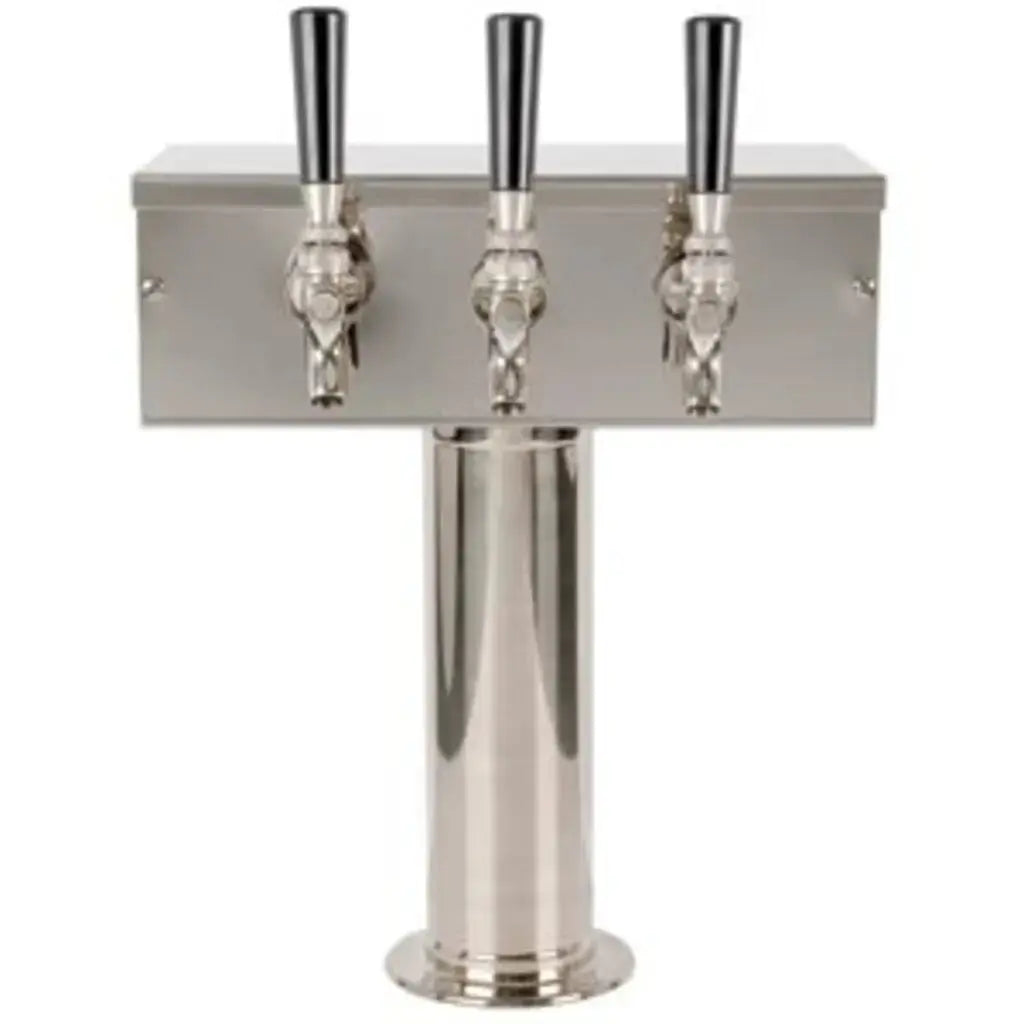
| Kegs in a refrigerated cabinet directly below or beside the tower | Air-cooled tower, sized to the lineup | Micro Matic 3-tap air-cooled T-style tower, $641.25 |
| Remote cooler, long draw route, or a tower that must be kept cold by a glycol loop | Glycol-cooled tower matched to the system design | Micro Matic 3-tap glycol-cooled T-style tower, $1,064.48 |
| High-volume wall-mounted station with limited bar-top space | Wall-mount, glycol-cooled multi-faucet tower | Kronos 8-faucet glycol-cooled wall-mount tower, $2,039.18 |

Polished stainless steel tower with chrome-plated brass faucets and shanks, 5-foot beer hoses, mounting gasket, and mounting hardware. Tap handles are not included.
2. Choose cooling based on the full beer route
Choose cooling based on the entire path from keg to faucet. An air-cooled tower is correct only for a direct-draw application where the refrigerated cabinet or adjacent cooler keeps the tower and short beer route cold. It is not a substitute for a remote cooling plan. A long route, a warm wall cavity, or a crowded multi-tap bar can leave the last section of line warm even when the keg is cold — and that produces foam and off-temperature pours regardless of how good the tower looks.
A glycol-cooled tower has glycol lines built into the assembly so it can be tied into a compatible power pack and trunk-line design. It is the correct direction when the tower is part of a long draw system or when cooling at the point of dispense must be maintained. The power pack, trunk length, ambient heat, vertical lift, line count, and tower load all affect the correct system. Use the Bar Draft System Planner to organize the measurements before selecting equipment.

Polished stainless tower with 304 stainless steel faucets and shanks, integrated glycol lines, 5-foot beer hoses, mounting gasket, and mounting hardware. Must be matched to a compatible glycol system.
3. Confirm the mounting method before ordering
A countertop tower works when the bar top can accept the mounting pattern and there is room below for beer and cooling lines. Confirm the underside of the counter before drilling. You need a clear path for the lines, enough access to tighten fittings, and a plan for where condensation and spills will go.
For an edge-mounted or temporary setup, a stainless steel clamp-on tower base with drip tray lets you mount a tower without drilling the bar top. It is a useful option for events, venues, and bars where a permanent countertop penetration is not practical. Check the current product listing for pricing and available single, double, and triple tower configurations.
Wall-mounted towers free up the bar top and can position a larger faucet bank where the walk-in or service wall makes sense. That does not remove the cooling requirement. The beer route still has to be designed so beer is cold at the shank, not just in the cooler.

An eight-faucet wall-mount draft tower for installations where bar-top space is limited. The glycol-cooled design supports a properly planned direct-through-wall or remote dispense system.
4. Build a complete parts list before ordering
A tower is only the visible end of the system. Before buying, confirm what comes with the exact configuration and make a parts list for what does not. Common items include faucets, shanks, beer hose or trunk line, tailpieces, hex nuts, neoprene washers, keg couplers, a CO2 or blended-gas system, and a drip tray. Always check the product listing for the exact included hardware — configurations vary by tower and manufacturer.
For a multi-brand bar, gas pressure and beer-line balance are just as important as the tower. Review why blended gas matters on long draw systems when the beer requires a higher applied pressure, and use a complete planning checklist before the install is scheduled. A polished tower cannot fix a warm line, incorrect coupler, loose fitting, or unbalanced system.
Which beer tower should you choose?
Choose the air-cooled three-tap tower when the kegs are in a refrigerated cabinet directly below or beside the dispense point and the short route can stay cold. Choose the glycol-cooled three-tap tower when the tower is part of a designed glycol system. Choose a wall-mount configuration such as the eight-faucet Kronos when the faucet bank needs to move off the bar top and the cooling route has been planned.
If you are replacing an existing tower, take a few photos before ordering: the current tower base, the underside of the bar or wall penetration, the shanks and fittings, and the route back to the kegs. Those details answer more selection questions than a faucet count alone.
Related guides
- What You Should Know About Planning a Beverage System
- Blended Gas for Draft Beer: Why You Need a Gas Blender
- Bar Draft System Planner
Frequently asked questions
What is a beer tower?
A beer tower is the dispense assembly that holds the faucets, shanks, and related cooling or beer-line connections at the bar. It is the visible end of a draft beer system.
What is the difference between an air-cooled and glycol-cooled beer tower?
An air-cooled tower is correct only for a direct-draw application where the refrigerated cabinet keeps the short dispense route cold. A glycol-cooled tower has integrated glycol lines and is used as part of a compatible glycol system when cooling must reach a remote or more demanding dispense point.
How many taps should a beer tower have?
Choose one faucet for each beer or beverage you need to serve at the same time. Confirm that the cooling system, beer-line route, gas setup, and service access all support that faucet count before buying.
Do beer towers come with faucets and beer lines?
Yes all towers include — faucets, shanks, beer hoses, and mounting hardware. Some may vary by model. Some connection hardware such as hex nuts, neoprene washers, and tailpieces may need to be ordered separately.
Need a tower that matches the system behind it?
Start with towers and drip trays, then get practical help matching the cooling, line, and connection hardware.
Shop beer towers and drip trays →Expert advice and free technical support for all orders.